Tea in perfumery: a note reconstructed more than extracted
An absolute of tea exists, but it is rare
Camellia sinensis, the shrub from which every category of tea is drawn, does yield a perfumery absolute: it is produced from fermented leaves, chiefly in China and Ceylon, and it smells of a dry, tannic leaf, a little hay-like, with a discreet animal undertone. It is used, but sparingly: the yield is low, the price high, and the material struggles to hold up in a composition. So it has to be said plainly - when a perfume announces tea, what is almost always meant is a reconstructed accord, assembled from molecules that have nothing to do with the leaf. Ionones for the violet, powdery facet, green aldehydes for fresh grass, smoky notes for the lapsang side, a little citrus for the briskness of the infusion. That is not a flaw: tea is a remembered smell rather than an obvious raw material, and it is the perfumer who decides which tea is being talked about.
What does tea smell like?
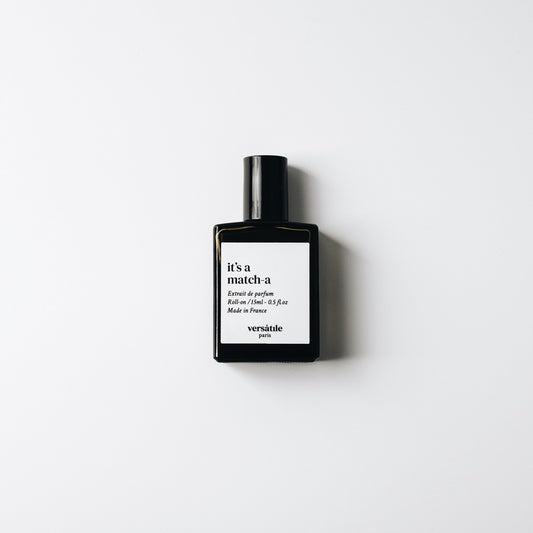
That depends entirely on which one. Black tea is dry, tannic, a little smoky, with the bitterness of a leaf left to steep too long; it pulls naturally towards leather and tobacco, and it is the warmest reading. Green tea is grassy, fresh, almost aqueous, with a clear bitterness and a transparency that places it near green perfumes; it is the reading the 1990s made popular, when Jean-Claude Ellena built an entire eau around it for Bulgari. Matcha, or white tea, is more contemporary: milky, vegetal, slightly iodine-like, somewhere between crushed grass and milk. One case stands apart, Earl Grey, which is not a tea but a black tea scented with bergamot - most perfumes that smell immediately and recognisably “of tea” in fact owe that recognition to the citrus, not to the leaf.
Tea perfumes at Le Soleil d'Or
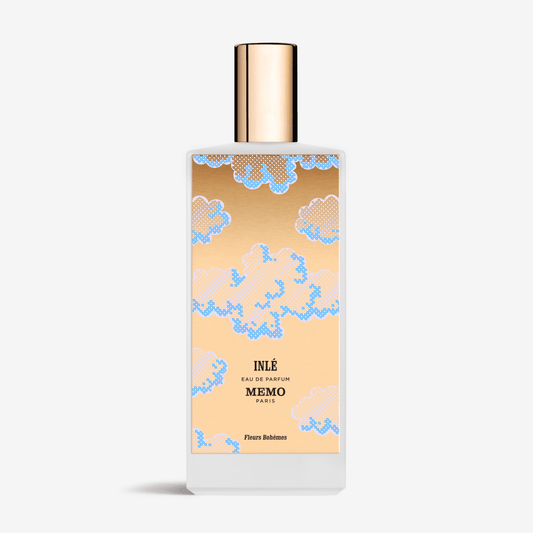
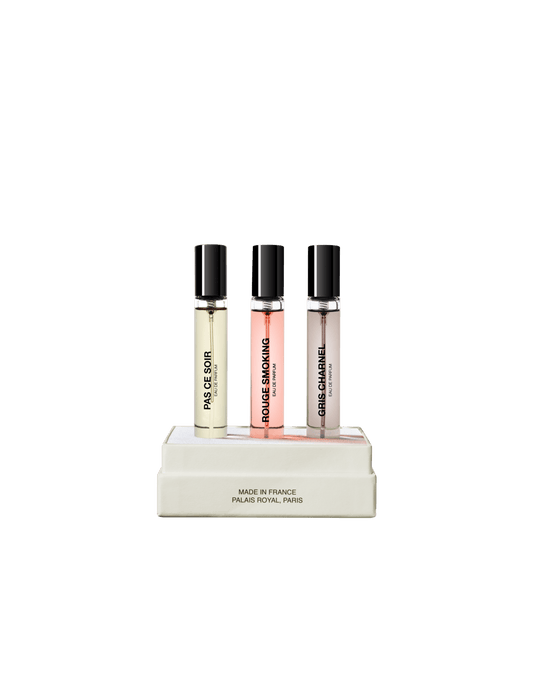
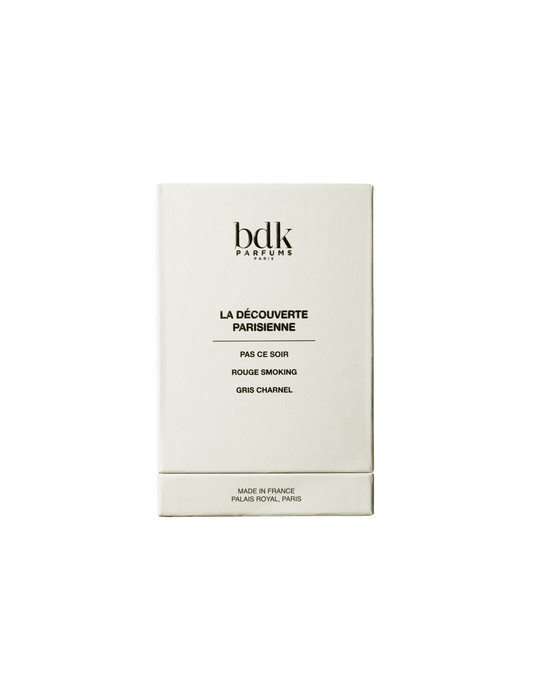
Silver Mountain Water by Creed gives the green, crystalline reading: tea is a limpid, almost ozonic accord here, set on blackcurrant and sandalwood. At the opposite end, Gris Charnel by BDK Parfums, signed by Mathilde Bijaoui, sets a powerful black tea against the milky softness of fig and iris. Bois Datchai by Maison Crivelli, composed by Dorothee Piot, pushes black tea towards the smoky and the leathery, under tart berries. Five o'clock au gingembre by Serge Lutens starts from a scalding Earl Grey and warms it with candied ginger and bitter cocoa. Spicier still, Winter Palace by Memo Paris, by Alienor Massenet, pairs a red tea and mate accord with vanilla and benzoin.
Tea accords and fragrance families
Tea belongs to no single family; it crosses several. In its green version it belongs to green perfumes and aromatic perfumes, where it keeps company with mint, neroli and jasmine. In its black, smoky version it joins leather perfumes and woody perfumes, alongside vetiver, cedar and incense. Its most constant partners are the citruses, bergamot first among them, and the spicy perfumes: cardamom, ginger, pepper, cinnamon. Osmanthus, with its apricot skin, and iris, with its powderiness, are black tea's two most elegant companions.
Who is it for, and when?
Tea is one of the most unisex and most discreet notes in perfumery, and an excellent choice for contexts where you would rather not impose: the office, meetings, public transport, dinners. The green readings suit spring and summer, where they give a dry freshness, less talkative than a citrus; the black, smoky readings work better in autumn and winter. One reservation worth knowing before buying: green tea accords rarely last long. Their transparency is made of light molecules, and many fade after two or three hours. A tea that holds all day is almost always a black tea set on a woody or amber base, and it is the base that holds, not the leaf.
How to choose your tea perfume
Start by working out which of the three teas you are after: the transparent green, the tannic black, or the milky matcha. These are such different worlds that the word “tea” on its own is no help in choosing. Then check what accompanies the note, because it is almost always the accompaniment that decides both the lasting power and the character. Try it on skin and let two hours pass: that is when a green tea shows whether it evaporates or holds. The bespoke discovery box brings together five 2 mL samples composed by hand, each to be worn for a full day. To get your bearings, compare a green tea handled as transparency, Silver Mountain Water, with a dense black tea set on a sandalwood base, Gris Charnel. The gap settles the question in a single day.
Tea at Le Soleil d'Or, a Lille perfumery since 1953
Founded in 1953 by Jeanne Muyllaert on the Grand'Place in Lille, Le Soleil d'Or is an independent perfumery passed down from one generation to the next. Hubert Maes (third generation) turned it into a reference for niche perfumery; today his daughters Victorine and Apolline Maes (fourth generation) uphold the same standards at 22 rue de la Clef, Lille (59800). Our team will let you smell the tea perfumes in the catalogue, with expert advice and guided trials, and can point you in the right direction using our guide to fragrance families.
Delivery & free in-store collection in Lille
Within mainland France, Colissimo delivery is free from 49 € to a pickup point and from 79 € to your door. Within Europe, it is free from 90 € to a pickup point and from 120 € to your door; we also ship worldwide. Live in Lille or nearby? Free in-store collection at 22 rue de la Clef is the fastest and most economical option. Full terms on our shipping page.