Skip to content
Language
Country/region
Search
Cart

Osmanthus Perfume – fruity floral, apricot and leather

A precious flower native to China with fruity-floral accords of peach, apricot and leather, osmanthus is the most sophisticated note in Asian perfumery. Rare and precious, it brings a fruity-floral complexity of absolute elegance. Osmanthus fragrances, from delicate fruity florals to leathery-floral compositions that pay tribute to this inimitable flower.

All osmanthus perfumes

Sort by:
Best selling
Sort by:
Filter and sort Close
Sort by:
Filter by:
  • $00 Product Title 3 colors
  • $00 Product Title 3 colors
  • $00 Product Title 3 colors
  • $00 Product Title 3 colors
  • $00 Product Title 3 colors
  • $00 Product Title 3 colors
  • $00 Product Title 3 colors
  • $00 Product Title 3 colors

Osmanthus in perfumery: the flower that does not smell floral

A small Asian flower, among the most expensive absolutes

Osmanthus fragrans is an East Asian shrub, grown mainly in China — the Guilin region is its historic centre — and also found in Japan. Its flowers are tiny and orange-yellow, and they bloom in autumn giving off a smell that carries a long way. They are picked by hand, which already explains part of the price; the rest comes from the yield, very low, which places osmanthus absolute among the costliest materials in perfumery, in the neighbourhood of iris and jasmine. Extraction is done with volatile solvent: it gives a concrete, then a thick orange-brown absolute. Distillation is ruled out, as it would destroy the very molecules that make the flower interesting. That price has a direct and rarely stated consequence: in most perfumes announcing osmanthus, the natural absolute is present in very small quantity and rounded out by synthetic molecules that reconstruct its effect.

What does osmanthus smell like?

Best to say it at the outset: not floral. That is what throws everyone on first smelling it. Osmanthus naturally contains lactones, the same families of molecules that make the smell of stone fruit, so it smells first of dry apricot and of peach skin — the fuzz of the fruit rather than its flesh. Then comes a leather facet, light but unmistakable, carried by ionones, and a dry bitterness of tea brewed a little too long. Those same ionones give it, in the background, a kinship with violet and iris. What it has none of is the creamy white of a jasmine or a tuberose. On skin it is a heart note: it appears after a quarter of an hour, lasts a few hours and fades before the base.

Osmanthus perfumes at Le Soleil d'Or

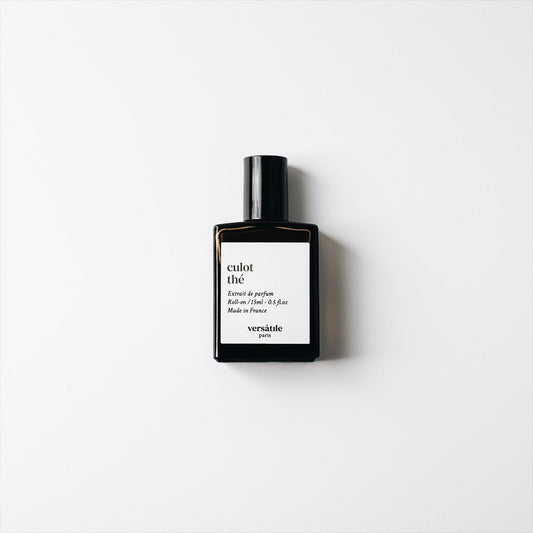
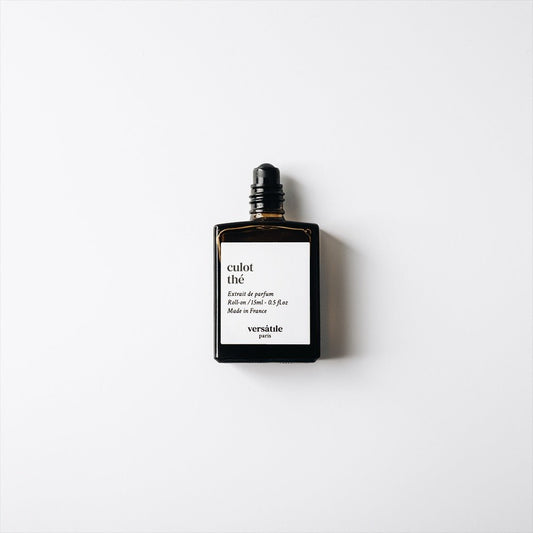
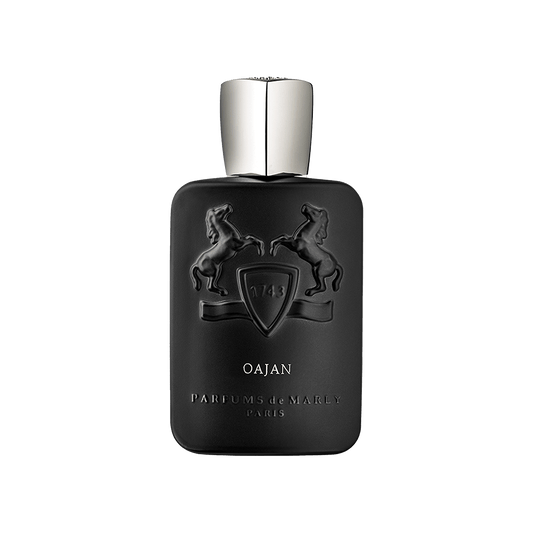
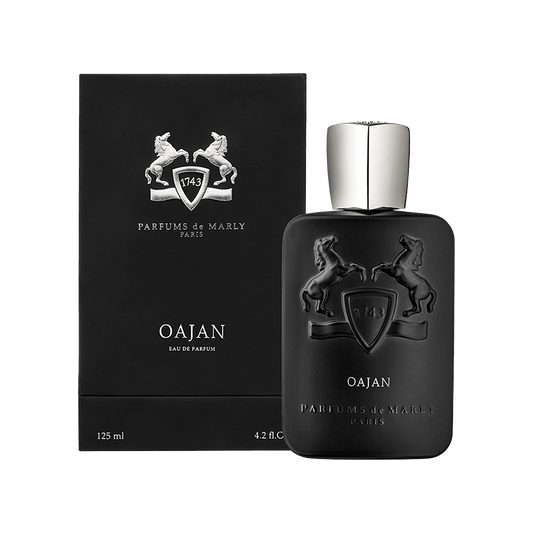
Nuit de cellophane by Serge Lutens gives the most floral reading: osmanthus holds the heart there with jasmine and lily, over a base of honey and almond. CULOT THE by Versatile, composed by Anne-Sophie Behaghel, works the other side instead: osmanthus sits in the base with apricot, under a heart of black tea and jasmine. Queen of Silk by Creed puts it at the top, with magnolia and saffron, above a base of incense and myrrh. OAJAN by Parfums de Marly pairs it with honey and cinnamon in a warm amber. More unexpected, Poivre Pomelo by Atelier Materi, signed by Marie Hugentobler, uses it to round out a peppery citrus.

Osmanthus accords and fragrance families

Its natural home is in fruity floral perfumes, where it does the job you might ask of a peach accord, but with a texture and a bitterness the accord does not have. Its leathery facet settles it just as comfortably into leather perfumes, where it softens the material without sweetening it. With tea and bergamot it composes those dry, clear accords contemporary perfumery uses a great deal; with honey and vanilla it tips towards gourmand perfumes without ever turning candied. Its ionones bring it close to iris and violet, with which it forms powdery hearts; over a saffron or an oud, it gives oriental perfumes a fruity opening that lightens them.

Who is it for, and when?

Osmanthus is unisex, and more plainly so than most floral notes: the fruit and the leather pull it out of the usual codes, and it wears equally well either way. It suits every season, with an advantage in between seasons and in autumn, where its fruity dryness reads most clearly; the amber readings hold up in winter without difficulty. It is discreet, which makes it a comfortable office note. One thing to know before buying: it is a heart note, it does not last the whole day, and a perfume sold on its osmanthus will leave you, six hours in, with whatever its base has decided. That is also why compositions in which osmanthus is genuinely the subject, rather than a source of light, remain rare.

How to choose your osmanthus perfume

Start by working out what you are after: osmanthus floral and luminous, or osmanthus dry, leathery and tea-like. Both directions live under the same name and they are not alike. A useful reflex in the boutique is to check what accompanies the note on the pyramid — an osmanthus set over tea and vetiver will not do at all the same thing as the same osmanthus over honey and vanilla. Try it on skin and wait half an hour, the time the heart needs to settle. The bespoke discovery box brings together five 2 mL samples composed by hand, each to be worn for a full day. To get your bearings, compare a floral osmanthus such as Nuit de cellophane with an osmanthus of tea and apricot such as CULOT THE.

Osmanthus at Le Soleil d'Or, a Lille perfumery since 1953

Founded in 1953 by Jeanne Muyllaert on the Grand'Place in Lille, Le Soleil d'Or is an independent perfumery passed down from one generation to the next. Hubert Maes (third generation) turned it into a reference for niche perfumery; today his daughters Victorine and Apolline Maes (fourth generation) uphold the same standards at 22 rue de la Clef, Lille (59800). Our team will let you smell the osmanthus perfumes in the catalogue, with expert advice and guided trials, and can point you in the right direction using our guide to fragrance families.

Delivery & free in-store collection in Lille

Within mainland France, Colissimo delivery is free from 49 € to a pickup point and from 79 € to your door. Within Europe, it is free from 90 € to a pickup point and from 120 € to your door; we also ship worldwide. Live in Lille or nearby? Free in-store collection at 22 rue de la Clef is the fastest and most economical option. Full terms on our shipping page.

Frequently asked questions about Osmanthus Perfume

What does osmanthus smell like?

Of dry apricot and peach skin, with a leather facet and the bitterness of black tea. It is a flower that does not smell floral, and that is precisely what makes it interesting.

Why does a flower smell of apricot?

Because osmanthus naturally contains lactones, the family of molecules responsible for the smell of stone fruit. The same ones are found in peach and apricot, and the olfactory mechanism is identical. The flower is not imitating the fruit: it is using the same molecules.

Why is osmanthus absolute so expensive?

Because the flowers are tiny, picked by hand over a short autumn season, and the extraction yield is very low. It ranks among the costliest materials on the palette. That is why many perfumes announcing it use a limited dose, rounded out with synthetics.

Osmanthus and a peach accord: what is the difference?

A peach accord is soft, round and sweet. Osmanthus has the same fruity origin but adds a tea bitterness and a leathery facet that keep it from turning into candy. On skin the difference shows up mainly after an hour: the peach accord flattens out, the osmanthus dries down.

Which osmanthus perfume should I start with?

Nuit de cellophane by Serge Lutens is the most legible way in: osmanthus sits at the heart, surrounded by flowers and set on a honeyed base. If you prefer the dry direction, CULOT THE by Versatile shows the other side, the one of tea and apricot. In the Lille boutique, the team will let you smell both in a row.