Skip to content
Language
Country/region
Search
Cart

Neroli Perfume fresh, green and citrusy floral

Distilled from the flowers of the bitter orange tree, neroli shares its origin with orange blossom but has a fresher, greener and more citrusy profile. A noble note of the great Eaux de Cologne and Mediterranean fragrances, it embodies a luminous, airy elegance. Neroli fragrances, from classic Eaux de Cologne to contemporary floral compositions that capture the white light of the Mediterranean.
All neroli perfumes

Sort by:
Best selling
Sort by:
Filter and sort Close
Sort by:
Filter by:
  • $00 Product Title 3 colors
  • $00 Product Title 3 colors
  • $00 Product Title 3 colors
  • $00 Product Title 3 colors
  • $00 Product Title 3 colors
  • $00 Product Title 3 colors
  • $00 Product Title 3 colors
  • $00 Product Title 3 colors

Neroli in perfumery: the bigarade flower put through steam

A distillation, a floral water, and a tiny yield

Neroli comes from the flower of the bigarade orange tree, Citrus aurantium var. amara, grown in Tunisia, Morocco, Egypt and Calabria. Flowering lasts only a few weeks in spring; the flowers are picked by hand early in the morning and must reach the still the same day, because they ferment quickly. They are steam-distilled, and it is that distillation which defines neroli — the same flower treated with solvents gives something else entirely, orange blossom absolute, whose difference we set out in detail on its own page. Two practical consequences. First: the water left in the still once the essence has been separated is orange blossom water, the one used in pastry — a by-product of this distillation, not a fine perfumery material. Second: the yield is very low, of the order of a tonne of flowers for a kilo of essence, and neroli is among the most expensive naturals on the palette. That is why it is often supplemented, or replaced, by bigarade petitgrain, distilled from the leaves of the same tree and far cheaper.

What does neroli smell like?

Of a white flower, but a cold one. That is what surprises people: you expect a heady floral and you get something bright, green, faintly metallic, with the bitterness of a freshly snapped stem and a sparkle that heads squarely towards orange and zest. Many people spontaneously file it with the citrus notes rather than the florals, and in practice they are not wrong. Against petitgrain it is more floral and less herbaceous; against jasmine, there is no comparison in density. On skin it is volatile: it occupies the first half hour with great clarity, then fades. A perfume built on neroli alone does not last, and that is worth knowing before buying — longevity always comes from what the perfumer put underneath.

Neroli perfumes at Le Soleil d'Or

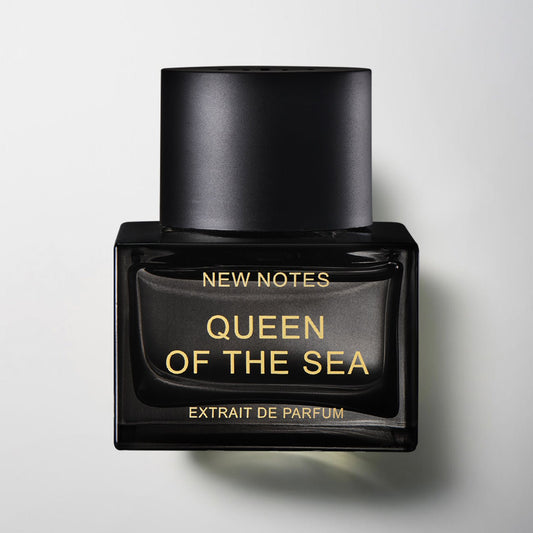
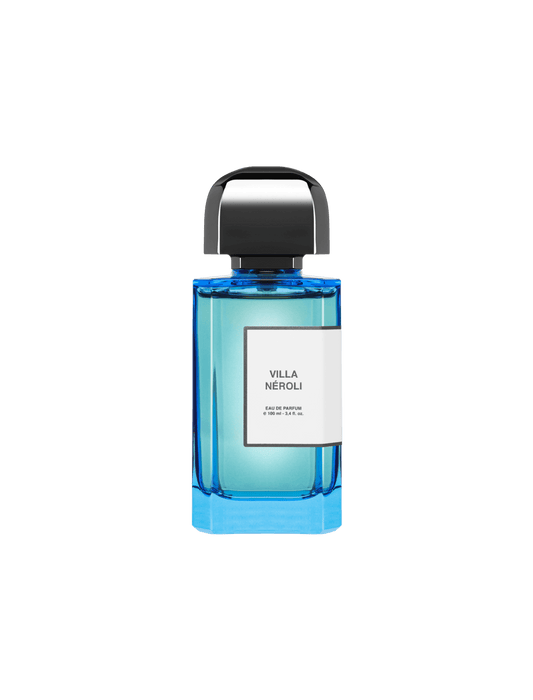
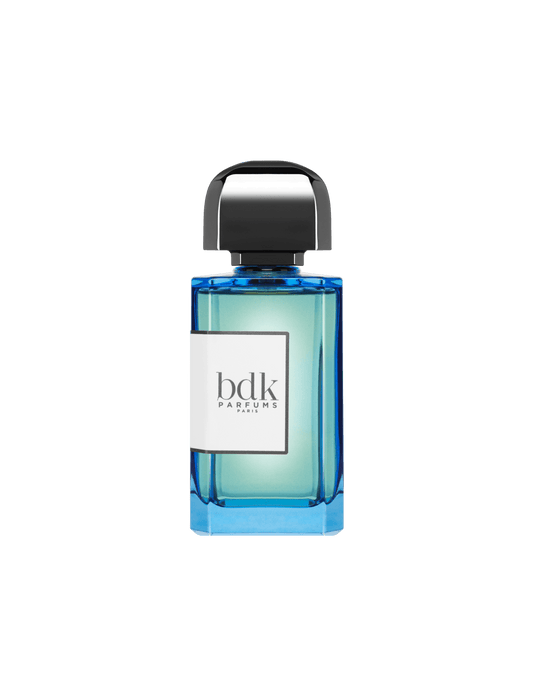
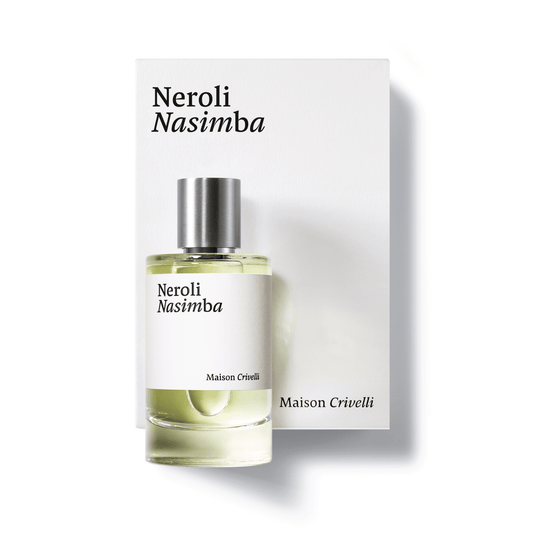
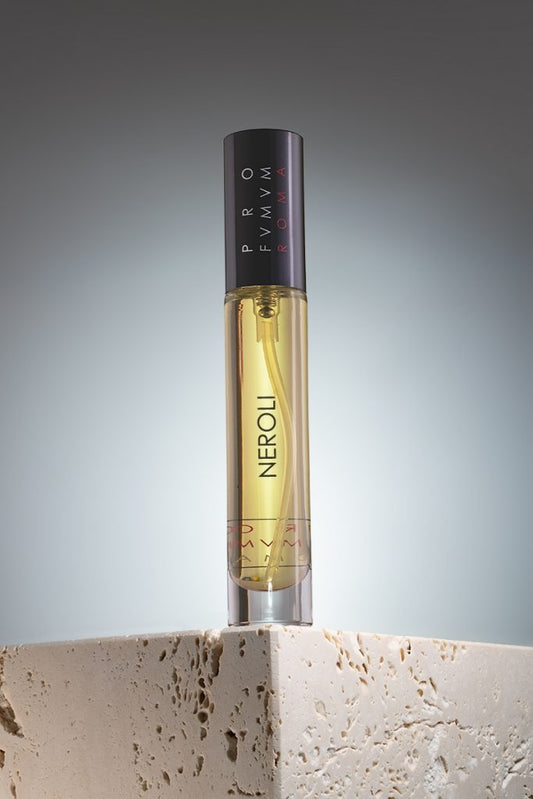
NEROLI ORANGER by Matiere Premiere, composed by Aurelien Guichard, is the textbook case: it puts distilled neroli and the absolute in the same formula, and you smell precisely what separates them. Villa Neroli by BDK Parfums, signed by Alexandra Carlin, gives a sunlit reading set on balms and resins, which settles the question of longevity. Neroli Nasimba by Maison Crivelli, composed by Paul Guerlain, sets it against a leather accord and vetiver: the flower turns frankly characterful. At Profumum Roma, Neroli plays the Mediterranean card and closes the trail on a resinous myrrh. More sideways, Queen of the Sea by New Notes uses it as a saline flash at the top of a marine floral.

Neroli accords and fragrance families

Neroli is one of the four pillars of the classic eau de Cologne, with lemon, bergamot and rosemary: it is what gives those hesperidic perfumes their floral roundness and keeps them from being mere citrus juice. With petitgrain and lavender it opens aromatic perfumes and green perfumes. In floral perfumes it serves as a clear counterpoint to jasmine or iris, which it lightens. Its most interesting function remains contrast: over leather, patchouli or sandalwood, its bitter freshness brings the base forward instead of softening it, and that is what produces the brightest woody perfumes.

Who is it for, and when?

Neroli is markedly unisex, more so than the orange blossom it comes from: its bitter freshness makes it just as wearable by men, and it is one of the rare floral notes never read as feminine. It suits the office, hot days, and any context where sillage is unwelcome. Spring and summer are its natural ground; in winter it is better chosen over an amber or resinous base that takes over. Two points of honesty: its volatility, already mentioned, and its price, which explains why many inexpensive compositions announcing neroli actually use synthetic reconstructions or petitgrain. That is not necessarily a flaw — it is simply audible.

How to choose your neroli perfume

The first question is not about neroli but about the gap with orange blossom: if you are after the honeyed, fleshy, slightly dirty side, it is the absolute you want, not neroli. Once that is settled, look at what lies underneath, since that is what will remain after an hour: balms, resins, leather or woods give completely different perfumes from the same flower. Try it on skin and let the opening pass. The bespoke discovery box brings together five 2 mL samples composed by hand, each to be worn for a full day. To get your bearings, compare a sunlit resinous neroli such as Villa Neroli with a neroli pulled taut by a leather accord such as Neroli Nasimba.

Neroli at Le Soleil d'Or, a Lille perfumery since 1953

Founded in 1953 by Jeanne Muyllaert on the Grand'Place in Lille, Le Soleil d'Or is an independent perfumery passed down from one generation to the next. Hubert Maes (third generation) turned it into a reference for niche perfumery; today his daughters Victorine and Apolline Maes (fourth generation) uphold the same standards at 22 rue de la Clef, Lille (59800). Our team will let you smell the neroli perfumes in the catalogue, with expert advice and guided trials, and can point you in the right direction using our guide to fragrance families.

Delivery & free in-store collection in Lille

Within mainland France, Colissimo delivery is free from 49 € to a pickup point and from 79 € to your door. Within Europe, it is free from 90 € to a pickup point and from 120 € to your door; we also ship worldwide. Live in Lille or nearby? Free in-store collection at 22 rue de la Clef is the fastest and most economical option. Full terms on our shipping page.

Frequently asked questions about Neroli Perfume

What does neroli smell like?

Of a cold white flower: bright, green, faintly metallic, with the bitterness of a freshly snapped stem and a sparkle heading towards orange and zest. Many people spontaneously file it with hesperidic perfumes rather than florals, and in practice they are not wrong.

Neroli and orange blossom: what is the difference?

It is the same flower, treated differently. Neroli is steam-distilled: bright, green, almost hesperidic. Orange blossom absolute is obtained with solvents: honeyed, fleshy, indolic. That difference is set out in detail on the orange blossom page.

Why is neroli so expensive?

Because the yield is tiny: it takes on the order of a tonne of flowers for a kilo of essence, over a flowering that lasts only a few weeks and a harvest done entirely by hand. It is one of the costliest naturals on the palette, which explains the frequent recourse to petitgrain, distilled from the leaves of the same tree.

Is orange blossom water the same as neroli?

No, but it is its direct by-product: it is the water left in the still once the neroli essence has been separated. It keeps the smell, much diluted. It is a kitchen product, not a fine perfumery material.

Which neroli perfume for summer?

Look for a composition where the flower is extended by a clear base — musky, woody or lightly resinous — rather than by a dense amber that will take over after an hour. NEROLI ORANGER by Matiere Premiere and Villa Neroli by BDK Parfums give two different answers to that question, and the team will let you smell them in a row in the Lille boutique.