Rum in perfumery: a reconstructed accord, not a raw material
How a rum accord is built
It has to be said straight away: there is no such thing as rum essence. No distillation, no extraction puts into a perfumer's hands a material that smells of the drink. What fragrance pyramids call “rum” is an accord, that is, an assembly built piece by piece to produce an impression. Its skeleton varies little. Esters and ethers — the same families of molecules that give ripe fruit its sweet smell and solvents their volatility — supply the alcoholic, sharp, slightly ethereal facet and the candied side. They are set over a base of vanilla, tonka bean and often tobacco, which provides depth and roundness. The rest is a matter of dosage: a little cinnamon or honey for spice and candied warmth, a wood for the cask, a dark fruit for the raisin. Rum is therefore an idea before it is a smell, and two perfumes that announce it may have almost nothing in common.
What does rum smell like?
Not like a glass of rum, and that is the second thing to say. What the accord renders is the world around the drink rather than the drink itself: molasses, sugar burnt at the bottom of a pan, the damp wood of an oak cask, a faintly fermented warmth. The alcoholic facet is there, but it is brief — it passes in the first few minutes like a prickle in the nose, then gives way to the sweet and the woody. Compared with its neighbours, rum is drier and harsher than caramel, less milky than vanilla, less smoky than tobacco. On skin it does not behave like a top note: the molecules that carry it work mainly in the heart and the base, and the impression of rum settles in after half an hour rather than on spraying.
Rum perfumes at Le Soleil d'Or
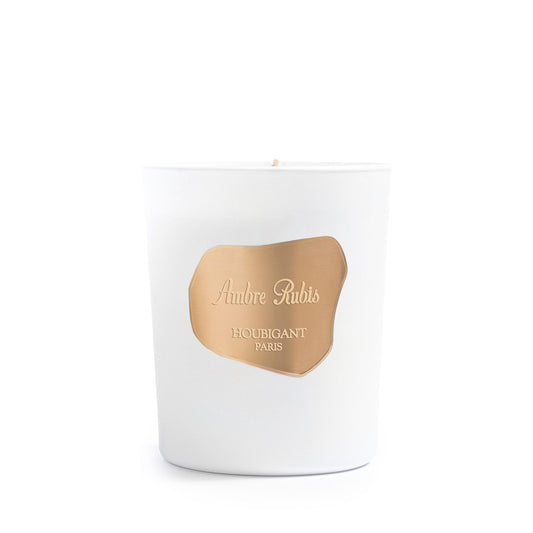
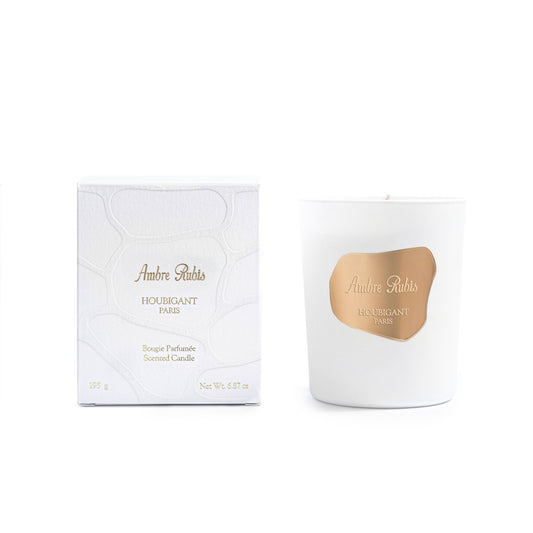
Cuir Velours by Naomi Goodsir, signed by Julien Rasquinet, places rum at the opening of a velvety leather, with immortelle and incense: it is the darkest reading. From the same house, Or du Serail by Bertrand Duchaufour slips it into the heart of an opulent amber, among honey, tobacco and beeswax. Bake by Akro, composed by Olivier Cresp, goes the other way and takes it into the pastry shop, over cream, praline and brown sugar. Gueule de Bois by Versatile, signed by Amelie Bourgeois, is an alcohol-free roll-on extrait that pairs it with cinnamon, incense and sandalwood. Fruitier, Ambre Rubis by Houbigant marries it to cherry over an amber base.
Rum accords and fragrance families
Rum belongs first of all to gourmand perfumes and amber perfumes, where it gives relief to sweet bases that would otherwise turn to syrup: its alcoholic harshness works as a counterpoint. With cocoa, coffee and coconut it composes the Caribbean dessert accords that contemporary perfumery keeps multiplying. Pushed towards the dry, with leather, tobacco and benzoin, it tips over to the side of oriental perfumes and leather perfumes. Finally, the oak cask calls it naturally towards woody perfumes: over a cedar or a guaiac wood it yields warm compositions that are no longer gourmand at all.
Who is it for, and when?
Rum is unisex, but it is not discreet: the accords that carry it are dense, sweet or resinous, and they last a long time because they are built on base materials. It is an evening and cold-season note, one that comes into its own on a scarf or a coat and quickly turns heavy in high summer. In the office and in shared spaces it calls for restraint: two sprays are enough, and the most pastry-like readings can be intrusive at the table. One thing worth knowing before buying: the sweetest compositions amplify a great deal on warm skin, to the point of shifting the balance between a trial in the boutique and a winter evening in a heated room.
How to choose your rum perfume
The first question to settle is not the house but the direction: are you after rum on the dessert side, with sugar and cream, or rum on the cask and tobacco side, dry and dark? The same word covers both, and the gap is considerable. Try it on skin and wait at least thirty minutes: on spraying, the alcoholic facet dominates and gives a false idea of what the perfume will become. The bespoke discovery box brings together five 2 mL samples composed by hand, each to be worn for a full day. To get your bearings, compare a pastry rum such as Bake with a leather rum such as Cuir Velours: between the two, you will know which side you are on.
Rum at Le Soleil d'Or, a Lille perfumery since 1953
Founded in 1953 by Jeanne Muyllaert on the Grand'Place in Lille, Le Soleil d'Or is an independent perfumery passed down from one generation to the next. Hubert Maes (third generation) turned it into a reference for niche perfumery; today his daughters Victorine and Apolline Maes (fourth generation) uphold the same standards at 22 rue de la Clef, Lille (59800). Our team will let you smell the rum perfumes in the catalogue, with expert advice and guided trials, and can point you in the right direction using our guide to fragrance families.
Delivery & free in-store collection in Lille
Within mainland France, Colissimo delivery is free from 49 € to a pickup point and from 79 € to your door. Within Europe, it is free from 90 € to a pickup point and from 120 € to your door; we also ship worldwide. Live in Lille or nearby? Free in-store collection at 22 rue de la Clef is the fastest and most economical option. Full terms on our shipping page.