Skip to content
Language
Country/region
Search
Cart

Honey Perfume golden, sensual warmth

Warm, golden and slightly animalic, honey brings compositions an incomparable natural sensuality and an enveloping texture. A base note that amplifies floral and oriental accords with a unique organic warmth, it evokes blossoming hives and summer meadows. Honey fragrances, from white florals of absolute softness to grand golden, opulent oriental compositions.

All honey perfumes

Sort by:
Best selling
Sort by:
Filter and sort Close
Sort by:
Filter by:
  • $00 Product Title 3 colors
  • $00 Product Title 3 colors
  • $00 Product Title 3 colors
  • $00 Product Title 3 colors
  • $00 Product Title 3 colors
  • $00 Product Title 3 colors
  • $00 Product Title 3 colors
  • $00 Product Title 3 colors

Honey in perfumery: the gourmand note that smells animalic

A beeswax absolute, not a syrup

Unlike most gourmand notes — caramel, praline, candyfloss — which exist only through synthesis, honey does have a genuine natural raw material. It is not obtained by distillation: beeswax is treated with volatile solvents, giving first a concrete and then a beeswax absolute, thick, dark yellow and extremely odorous. Honey absolutes, prepared from honey itself, also exist. In both cases yields are low and the material expensive, so it is rarely used in large quantities, and it is nearly always supported by synthetic molecules that extend its effect and soften its rough edges.

What does honey smell like?

Not of sugar, at least not at first. Beeswax absolute is warm, waxy and dry, with a smell of hay and blond tobacco that far outweighs the expected sweetness. Then comes the disconcerting part: at high doses a frankly animalic, urinous facet appears, close to the smell of a stable, due in particular to phenylacetate. This is not a manufacturing accident but the character of the material itself, and perfumers use it to give body to compositions that would otherwise fall flat. It is worth saying plainly: a well-built honey perfume never smells of a honey pot, and many people are taken aback on first trying one. The same waxy warmth is found in immortelle, and a comparable honeyed facet in the absolutes of orange blossom and tuberose. On skin, honey lasts a long time, stays close to the body, and turns more animalic as the hours pass.

Honey perfumes at Le Soleil d'Or

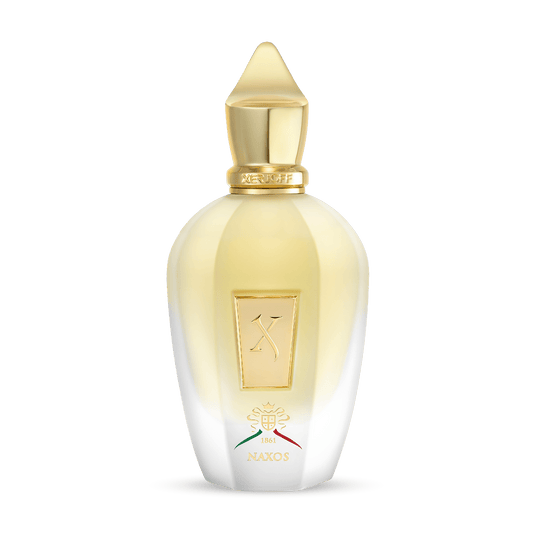
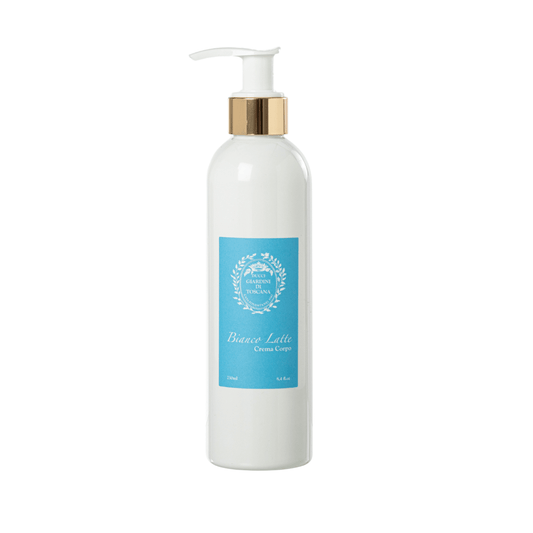
Oro e Miele by Giardini di Toscana gives the gentlest reading: honey is melted into heliotrope, vanilla and iris, in a powdery register that all but erases the animalic side. At the opposite end, Or du Serail by Naomi Goodsir, signed by Bertrand Duchaufour, embraces beeswax alongside tobacco and rum, dense and warm. Nektar by Laboratorio Olfattivo, composed by Pierre-Constantin Gueros, pulls it towards leather and frankincense. Naxos by Xerjoff sets it on an accord of tobacco and cinnamon, while La fille de Berlin by Serge Lutens uses it to thicken a red rose, which it turns fleshy and almost heady.

Honey accords and fragrance families

Honey belongs first to oriental perfumes and amber perfumes, where it works with labdanum, benzoin and vanilla. Its most classic accord remains the one with tobacco: with tonka bean and rum it builds those warm bases filed under gourmand perfumes without ever really being sweet. Its animalic facet brings it close to leather perfumes, where it usefully replaces the animal materials of the past. On the floral side it thickens and fleshes out rose, orange blossom and osmanthus, giving floral perfumes far more density than average. Finally, a touch of saffron or cistus is enough to draw out its dry leather side rather than its confectionery side.

Who is it for, and when?

Honey is unisex, but it is not a consensual note: it is in fact one of the most polarising on the palette, because its animalic facet leaves nobody indifferent. That is worth knowing before you buy. Its warmth points it firmly towards autumn and winter, where it settles beautifully on wool and on a scarf; in high summer, and especially on warm skin, it gains animalic intensity and can become cumbersome. It also lasts a long time and projects, so it should be dosed with restraint in an office or on public transport. The floral and powdery readings, on the other hand, go anywhere without difficulty.

How to choose your honey perfume

The question to settle is simple: do you want honey on its floral, powdery side, or on its waxy, tobacco, animalic side? The same word covers two very different experiences. Never judge it on a blotter alone, and never within the first quarter of an hour: it is after two or three hours, once the material has warmed on skin, that the note shows its true face. The bespoke discovery box brings together five 2 mL samples composed by hand, each to be worn for a full day; it is the best way to check that the animalic facet suits you before buying a bottle. To get your bearings, compare a powdery, reassuring honey such as Oro e Miele with a waxy, tobacco-laden one such as Or du Serail.

Honey at Le Soleil d'Or, a Lille perfumery since 1953

Founded in 1953 by Jeanne Muyllaert on the Grand'Place in Lille, Le Soleil d'Or is an independent perfumery passed down from one generation to the next. Hubert Maes (third generation) turned it into a reference for niche perfumery; today his daughters Victorine and Apolline Maes (fourth generation) uphold the same standards at 22 rue de la Clef, Lille (59800). Our team will let you smell the honey perfumes in the catalogue, with expert advice and guided trials, and can point you in the right direction using our guide to fragrance families.

Delivery & free in-store collection in Lille

Within mainland France, Colissimo delivery is free from 49 € to a pickup point and from 79 € to your door. Within Europe, it is free from 90 € to a pickup point and from 120 € to your door; we also ship worldwide. Live in Lille or nearby? Free in-store collection at 22 rue de la Clef is the fastest and most economical option. Full terms on our shipping page.

Frequently asked questions about Honey Perfume

What does honey smell like in perfume?

Far less sugary than people expect. Beeswax absolute is warm, waxy and dry, with a smell of hay and blond tobacco, then an animalic facet that emerges as it dries down. A well-built honey perfume never smells of a honey pot.

Why does honey smell animalic in perfumery?

Because beeswax absolute contains molecules with a urinous smell, chief among them phenylacetate. At low doses they give warmth and relief; at high doses they clearly evoke a stable. That is the character of the material, not a flaw, and it is what makes it hard to dose.

Is honey a natural material in perfumery?

Partly, and that is rare for a gourmand note. Beeswax absolute, obtained with solvents, and honey absolutes genuinely exist. But their cost and their character mean they are almost always paired with synthetic molecules that extend the effect and round off the animalic side.

Honey and tobacco: why are they so often found together?

Because they share the same dry warmth and the same smell of hay. Beeswax absolute already smells of blond tobacco, and tobacco already smells of honey: pairing them simply underlines a kinship that exists in the raw materials. The same family of smells is found in immortelle.

Which honey perfume should I start with?

Start with a powdery reading, where the material is legible without its animalic facet: Oro e Miele by Giardini di Toscana is a good way in. If you want to smell honey as it really is, Or du Serail by Naomi Goodsir gives the other extreme. In the Lille boutique, the team will let you smell both in a row.