Skip to content
Language
Country/region
Search
Cart

Mint Perfume – green, invigorating freshness

Fresh, invigorating and immediately recognisable, mint brings a vegetal, camphorous vivacity to aromatic and aquatic compositions. From the crystalline menthol of peppermint to the green softness of spearmint, it offers a broad olfactory spectrum. Mint fragrances, from fresh, tonic aromatics to aquatic-vegetal compositions that awaken the senses with incomparable energy.

All mint perfumes

Sort by:
Best selling
Sort by:
Filter and sort Close
Sort by:
Filter by:
  • $00 Product Title 3 colors
  • $00 Product Title 3 colors
  • $00 Product Title 3 colors
  • $00 Product Title 3 colors
  • $00 Product Title 3 colors
  • $00 Product Title 3 colors
  • $00 Product Title 3 colors
  • $00 Product Title 3 colors

Mint in perfumery: a freshness you feel before you smell it

Mentha piperita, a distilled plant

Peppermint is a sterile hybrid, born of a cross between spearmint and water mint. Since it produces no viable seed, it is propagated by runners, which gives whole fields of genetically identical plants, grown mainly in the United States, in India and in China. The aerial parts are harvested just before flowering and steam-distilled: the yield is high, which makes mint one of the few frankly inexpensive natural materials on the palette. The essence contains thirty to fifty per cent menthol. Its neighbour spearmint, Mentha spicata, contains almost none: it owes its smell to carvone and produces no sensation of cold. As for the crystallised menthol of commerce, it most often comes from a third species, cornmint.

What does mint smell like?

Here is the point most pages pass over in silence: the freshness of mint is not only a smell, it is a trigeminal sensation. Menthol activates the cold receptors of the nasal lining, exactly as the pungency of pepper activates the pain receptors. Nothing has cooled down, but the trigeminal nerve transmits a cold signal, and one physically feels a drop in temperature. That is why a mentholated perfume gives an impression of a draught where a citrus gives only an impression of light. The smell itself is green, slightly camphorous, a little medicinal, with an almost cutting sharpness. Compared with its neighbours, mint is colder than basil, less herbaceous than sage, less dry than rosemary. It is highly volatile and occupies mainly the first ten to fifteen minutes.

Mint perfumes at Le Soleil d'Or

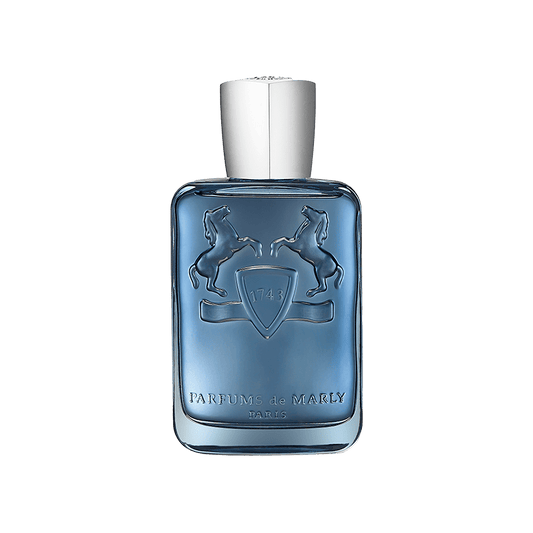
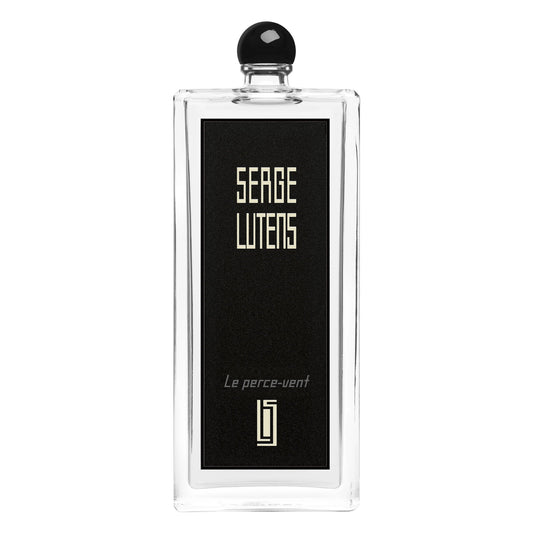
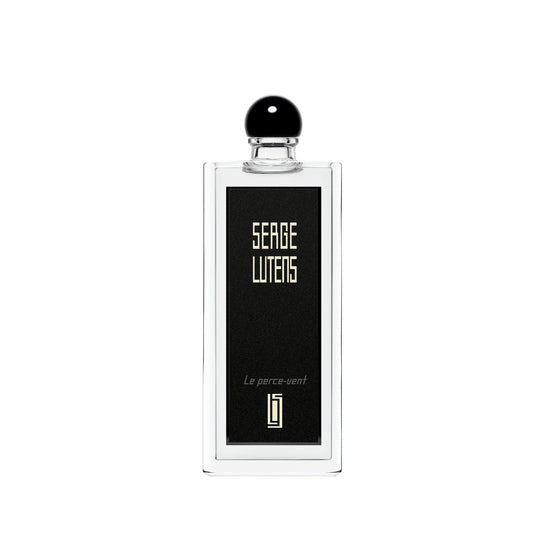
Green Irish Tweed by Creed shows the classic use: peppermint opens alongside galbanum and lemon, then steps aside for violet and oakmoss. Sedley by Parfums de Marly uses spearmint instead, softer, to ice a citrus opening before a base of sandalwood and musks. Mon Vetiver by Essential Parfums, signed by Bruno Jovanovic, sets it over lime and extends it with vetiver. At Serge Lutens, Le perce-vent goes through a mentholated clary sage and tips towards powdery iris. The rare case is Thundra by Profumum Roma, an extrait in which mint really is the subject, held by patchouli and musk.

Mint accords and fragrance families

Mint is first of all a note of aromatic perfumes and fougere perfumes, where it stands alongside lavender, rosemary, geranium and sage. Its green coldness also places it among green perfumes, next to galbanum and blackcurrant. Set at the top of a hesperidic perfume, over bergamot or lime, it extends the citrus flash by a few valuable minutes. Its most interesting use, though, remains contrast: a touch of mint over a vetiver, a patchouli or a tea lights up a dark base without really lightening it, and that is often exactly what the perfumer is after.

Who is it for, and when?

Mint is entirely unisex, but it is seasonal as few notes are: its effect of physical cold is an asset at thirty degrees and a nuisance in January, where it feels like a coat that is too thin. It is a daytime note, for sport, for the office in summer, for commuting and for heat. It does not last long — fifteen minutes, sometimes less, with a lingering that owes more to residual menthol than to real staying power. So do not look for a perfume that will smell of mint all day: what matters is the aromatic heart or the woody base that takes over. Spraying onto clothing extends the effect appreciably.

How to choose your mint perfume

It is worth saying plainly: this is a difficult note to wear. The association with toothpaste and chewing gum is almost impossible to avoid, because that is where the Western nose learned this smell, and a slightly generous dose immediately tips the composition over to the hygiene side. That is also why mint is almost always used as a touch, rarely as the subject. Try it on skin and judge at thirty minutes, once the menthol has gone: that is where the purchase is decided. The bespoke discovery box brings together five 2 mL samples composed by hand, each to be worn for a full day. To get your bearings, compare a mint treated as the subject, Thundra, with a mint used as an opening that fades behind a woody base, Green Irish Tweed.

Mint at Le Soleil d'Or, a Lille perfumery since 1953

Founded in 1953 by Jeanne Muyllaert on the Grand'Place in Lille, Le Soleil d'Or is an independent perfumery passed down from one generation to the next. Hubert Maes (third generation) turned it into a reference for niche perfumery; today his daughters Victorine and Apolline Maes (fourth generation) uphold the same standards at 22 rue de la Clef, Lille (59800). Our team will let you smell the mint perfumes in the catalogue, with expert advice and guided trials, and can point you in the right direction using our guide to fragrance families.

Delivery & free in-store collection in Lille

Within mainland France, Colissimo delivery is free from 49 € to a pickup point and from 79 € to your door. Within Europe, it is free from 90 € to a pickup point and from 120 € to your door; we also ship worldwide. Live in Lille or nearby? Free in-store collection at 22 rue de la Clef is the fastest and most economical option. Full terms on our shipping page.

Frequently asked questions about Mint Perfume

What does mint smell like in perfume?

Green, slightly camphorous, a little medicinal, with an almost cutting sharpness. It is colder than basil and less herbaceous than sage. Highly volatile, it occupies mainly the first ten to fifteen minutes.

Why does mint give a sensation of cold?

Because it is not only a smell but a trigeminal sensation. Menthol activates the cold receptors, exactly as the pungency of pepper activates the pain receptors. Nothing has cooled down, but the trigeminal nerve transmits a cold signal, and one physically feels a drop in temperature.

Does a mint perfume smell of toothpaste?

The risk is real, and it is what makes this note difficult to wear. The Western nose learned menthol through oral hygiene, and a slightly generous dose tips the composition that way. This is why perfumers almost always use it as a touch, over an aromatic or woody base that contradicts it.

Peppermint and spearmint: what is the difference?

Peppermint is rich in menthol: it is the one that produces the cold effect. Spearmint, Mentha spicata, owes its smell to carvone, softer and sweeter, and causes no sensation of cold. A perfumer chooses one or the other depending on whether a thermal shock or a simple green freshness is wanted.

Which mint perfume for summer?

Look for a composition where mint opens and then hands over to an aromatic heart or a light woody base, rather than a lone mint that will have vanished within a quarter of an hour. Sedley by Parfums de Marly and Mon Vetiver by Essential Parfums are two good examples. Also think of spraying onto clothing: the effect lasts longer than on skin.