Skip to content
Language
Country/region
Search
Cart

Violet Perfume powdery, ionone-rich and nostalgic

A delicate flower with slightly powdery, ionone and green accords, violet embodies the nostalgia and refinement of perfumery of yesteryear. Its powdery softness, close to iris, gives it a personality at once retro and timeless. Violet fragrances, from vintage powdery floral to contemporary creations where violet converses with wood and leather.

All violet perfumes

Sort by:
Best selling
Sort by:
Filter and sort Close
Sort by:
Filter by:
  • $00 Product Title 3 colors
  • $00 Product Title 3 colors
  • $00 Product Title 3 colors
  • $00 Product Title 3 colors
  • $00 Product Title 3 colors
  • $00 Product Title 3 colors
  • $00 Product Title 3 colors
  • $00 Product Title 3 colors

Violet in perfumery: a flower that cannot be extracted

The flower that yields no essence

This has to be said straight away, because it is the heart of the note: no perfume contains violet flower essence. Viola odorata has been distilled, treated by enfleurage, solvent-extracted — the yield stayed derisory and the material obtained unusable at perfumery scale. What we smell comes from two very real sources instead. The first is violet leaf absolute, extracted from leaves grown notably in Egypt and in the south of France: it is green, watery, almost cucumber or pea pod, and has nothing floral about it; it remains one of the most expensive materials on the palette, which is why it is dosed in traces. The second is chemical: the ionones, isolated at the end of the 19th century through the work of Ferdinand Tiemann and Paul Kruger, which gave for the first time a reliable way of rendering the smell of the flower. All the powderiness, all the sweetness, everything called “violet” in a modern perfume comes from there. This is not an embarrassing admission: it is one of the cases where synthesis created a smell nature could not deliver.

What does violet smell like?

Of two very different things, depending on the material used. The leaf smells of wet green, cut stems, cucumber, with a frank bitterness close to galbanum; it is a fresh, dry smell, often read as masculine. The ionones, on the contrary, smell powdery and sweet, of boiled sweets and old lipstick, with a woody facet and a touch of raspberry. That kinship with make-up is not a figure of speech: early twentieth-century cosmetics were perfumed with ionones, and our memory kept the link. Violet is also the direct cousin of iris, whose irones belong to the same family of molecules — hence the shared powdery base that many people confuse. One phenomenon specific to this note is worth knowing: ionones saturate the olfactory receptors very quickly. After a few minutes violet seems to disappear, then comes back a while later. It is not the perfume fading, it is your nose dropping out for a moment — the people around you go on smelling it.

Violet perfumes at Le Soleil d'Or

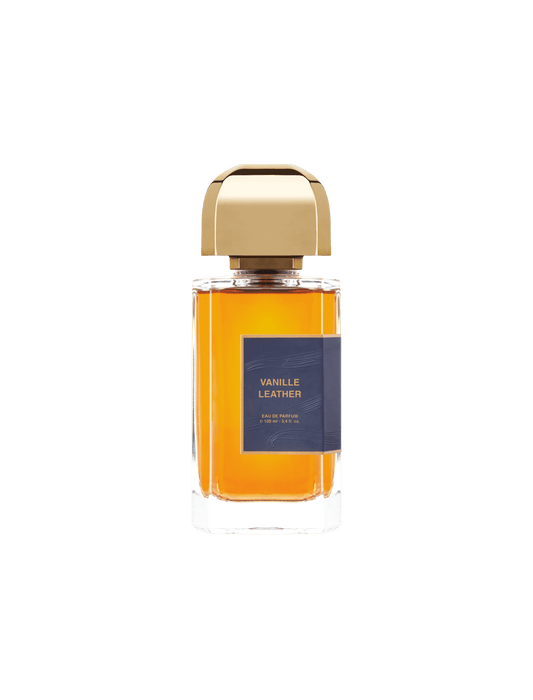
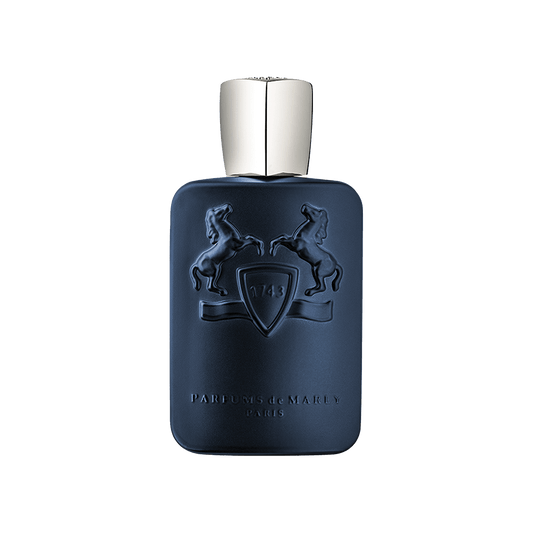
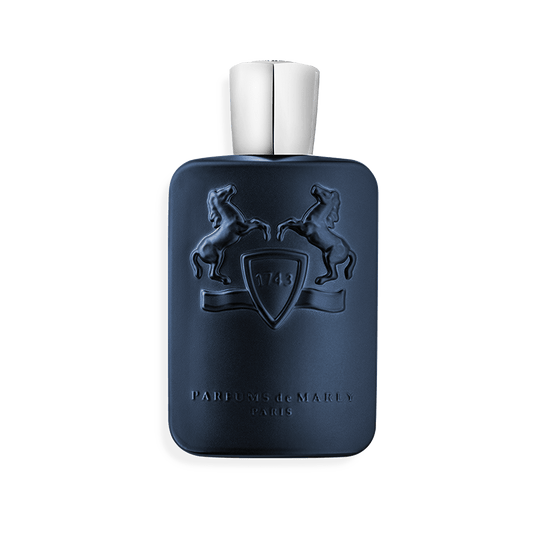
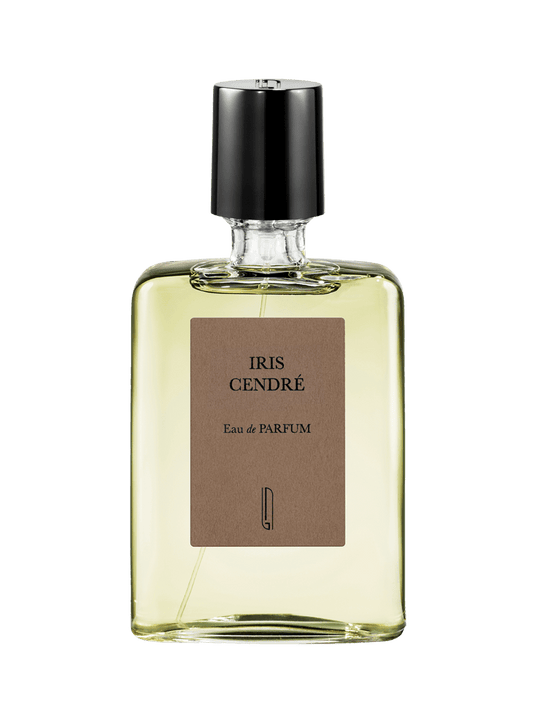
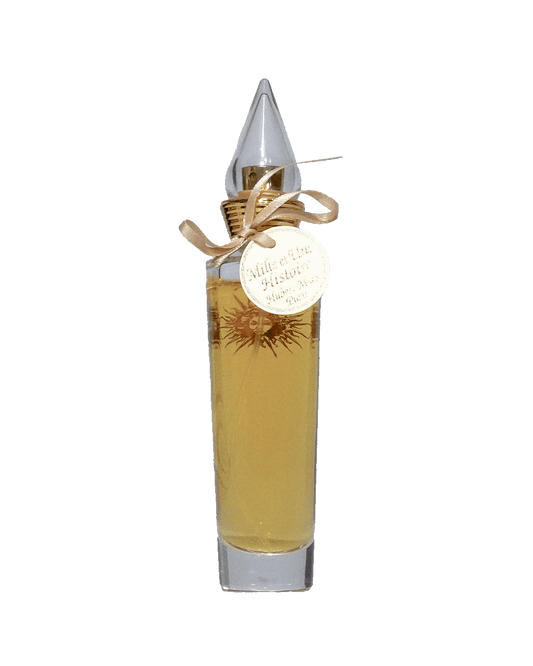
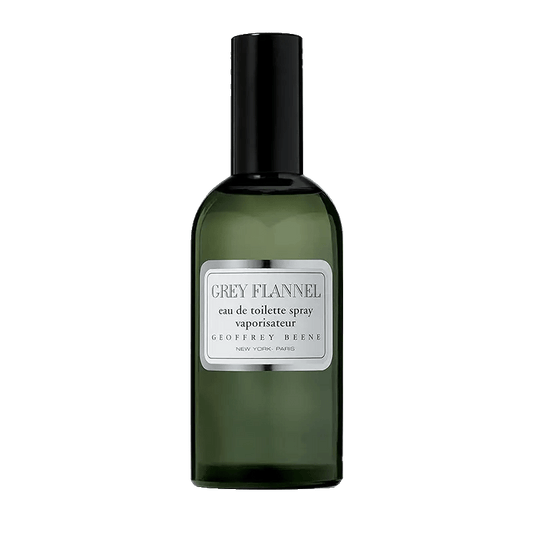
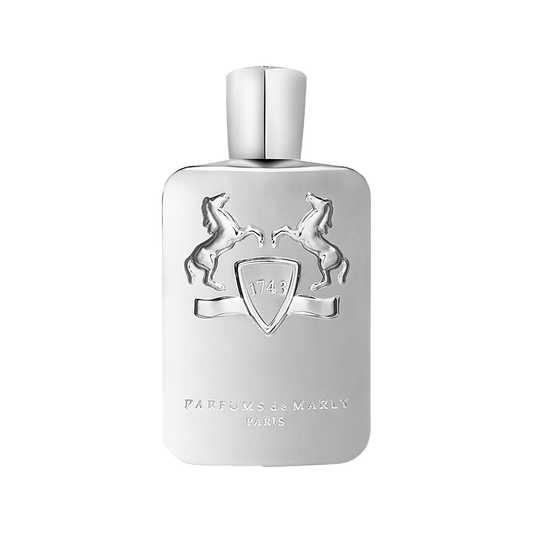
Grey Flannel by Geoffrey Beene, released in 1976, remains the reference for the leaf: green, bitter, dry, backed by galbanum and oakmoss, it shows how far this note can be from sweet. At the opposite end, Iris Cendre by Naomi Goodsir, signed by Julien Rasquinet, pairs it with iris and tobacco in a smoky powder. Vanille Leather by BDK Parfums, composed by Dominique Ropion, uses it to soften a leather and vanilla accord. Mille et une Histoire by Hubert Maes Creations, written by Hubert Maes, marries it to iris and peach. Finally Layton by Parfums de Marly, by Hamid Merati-Kashani, is a reminder that a great many people wear violet without knowing it: it is there, discreet, and nobody names it.

Violet accords and fragrance families

Violet belongs to floral perfumes by name, but in practice it lives mostly among powdery perfumes, alongside iris, heliotrope and mimosa. Through its leaf it joins green perfumes and serves as a bitter opening for a great many fougere perfumes and chypre perfumes, where it pairs with galbanum and blackcurrant. Its most famous alliance is with leather: powdery softness against animal dryness, one of the founding contrasts of leather perfumes. With rose and raspberry it gives retro fruity florals; with vanilla and tonka bean it heads towards gourmand perfumes; over a sandalwood or a cedar it produces those powdery woody perfumes that contemporary perfumery uses a great deal.

Who is it for, and when?

It all depends which of the two violets is meant, and that is what makes the note hard to advise on from a distance. The green leaf has a long and solid masculine history, that of the great greens of the nineteen-seventies; the powderiness of the ionones is read as more feminine and, let us say it, as retro by a good many people — it is the smell of old sweets and old powder compacts. So the note is genuinely unisex, but that plays out in the composition, not in the note itself. As for season, violet is a between-seasons note: the green of the leaf works well in spring, while the powdery side needs the cool of autumn to avoid turning heavy. Its staying power is decent without being exceptional, and the partial anosmia described above completely distorts how it is judged: many people overspray a violet perfume simply because they can no longer smell it.

How to choose your violet perfume

The first question to settle is leaf or flower, because those are two opposite smells behind a single word: green and bitter on one side, powdery and sweet on the other. The second is not to trust your own nose alone. Ionones saturate the receptors and it is common to smell nothing at all after ten minutes; ask someone near you what they pick up, the gap is often striking. The bespoke discovery box brings together five 2 mL samples composed by hand, each to be worn for a full day: it is the only way to follow a violet through its comings and goings. To get your bearings, compare Grey Flannel, which is the leaf in its pure state, with Iris Cendre, which is the powder. Everything else sits between those two markers.

Violet at Le Soleil d'Or, a Lille perfumery since 1953

Founded in 1953 by Jeanne Muyllaert on the Grand'Place in Lille, Le Soleil d'Or is an independent perfumery passed down from one generation to the next. Hubert Maes (third generation) turned it into a reference for niche perfumery; today his daughters Victorine and Apolline Maes (fourth generation) uphold the same standards at 22 rue de la Clef, Lille (59800). Our team will let you smell the violet perfumes in the catalogue, with expert advice and guided trials, and can point you in the right direction using our guide to fragrance families.

Delivery & free in-store collection in Lille

Within mainland France, Colissimo delivery is free from 49 € to a pickup point and from 79 € to your door. Within Europe, it is free from 90 € to a pickup point and from 120 € to your door; we also ship worldwide. Live in Lille or nearby? Free in-store collection at 22 rue de la Clef is the fastest and most economical option. Full terms on our shipping page.

Frequently asked questions about Violet Perfume

What does violet smell like in perfume?

Of two distinct smells. The leaf smells of wet green, cut stems and cucumber, with a bitterness close to galbanum. The ionones smell powdery and sweet, of boiled sweets and old lipstick, with a woody facet. One word, two opposite directions.

Is there such a thing as violet flower essence?

No, and that is the essential point about this note. The flower cannot be extracted in any usable way: the yields are derisory. What you smell in a perfume comes from violet leaf absolute, which is very green, and above all from the synthetic ionones isolated at the end of the 19th century.

Why can't I smell violet any more after a few minutes?

Because ionones quickly saturate the olfactory receptors. The note seems to disappear and then return: it is not the perfume fading, it is your nose dropping out for a moment. The people around you go on smelling it normally, which explains a great deal of overspraying.

Violet and iris: what is the difference?

They are close because they share a family of molecules: ionones for violet, irones for iris. Iris is colder, earthier, with a carrot-and-butter facet; violet is sweeter and more flowery. The powdery base, though, is common to both.

Which violet perfume should I start with?

It depends which side appeals to you. For the dry green leaf, Grey Flannel by Geoffrey Beene is the historic way in. For the powder, Iris Cendre by Naomi Goodsir gives a smoky, grown-up reading. In the Lille boutique, the team will let you smell both in a row, which settles the question in a minute.