Skip to content
Language
Country/region
Search
Cart

Sage Perfume — herbal, camphorous freshness

Common sage is a Mediterranean plant whose grey-green leaves are steam distilled into a highly aromatic oil. It smells of crushed herbs, camphor and sun-warmed stone, with a dry bitterness that is easy to recognise. A founding material of fougères and aromatic accords, it brings edge and clarity to a composition. Soleil d'Or offers a selection running from bright colognes to smoky woods.

All sage perfumes

Sort by:
Best selling
Sort by:
Filter and sort Close
Sort by:
Filter by:
  • $00 Product Title 3 colors
  • $00 Product Title 3 colors
  • $00 Product Title 3 colors
  • $00 Product Title 3 colors
  • $00 Product Title 3 colors
  • $00 Product Title 3 colors
  • $00 Product Title 3 colors
  • $00 Product Title 3 colors

Sage in perfumery: the aromatic herb behind the fougère

Sage, herb of the Mediterranean scrub

Common sage, Salvia officinalis, belongs to the mint family and grows all around the Mediterranean. Its downy grey-green leaves are steam distilled into a highly aromatic essential oil. The main sources are Dalmatia, Albania, Spain and southern France. The name comes from the Latin salvare, to save: the plant was a medicinal and culinary material long before it entered perfumery. It should not be confused with clary sage, a neighbouring species with a far more amber and musky profile. Common sage is used in small doses, in the top and heart, to give relief to green accords and fresh waters.

What does sage smell like?

Sage smells first of herbs crushed between the fingers. A camphorous facet follows, almost eucalyptus-like, then a dry, peppery, slightly earthy bitterness. Many people also read something mineral in it, close to stone heated by the sun. This is not a sweet note: it stings, it refreshes, it cleans. In the top it creates an open-air effect; in the heart it tightens floral accords and keeps fougères from turning soapy. Its own longevity is modest, a few hours at most, yet it marks the opening strongly and leaves a recognisable green imprint before the woods take over.

Sage perfumes at Soleil d'Or

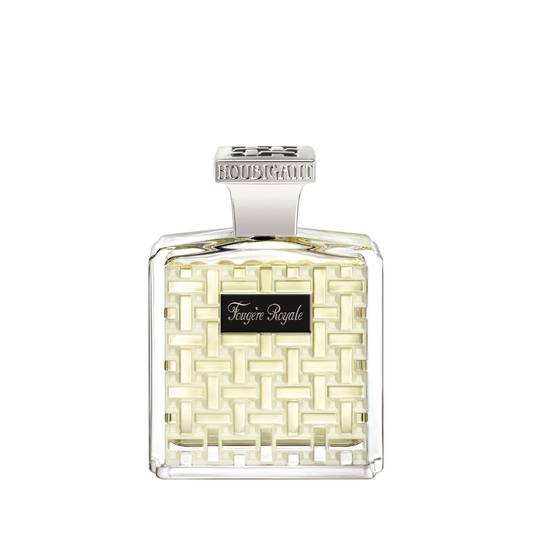
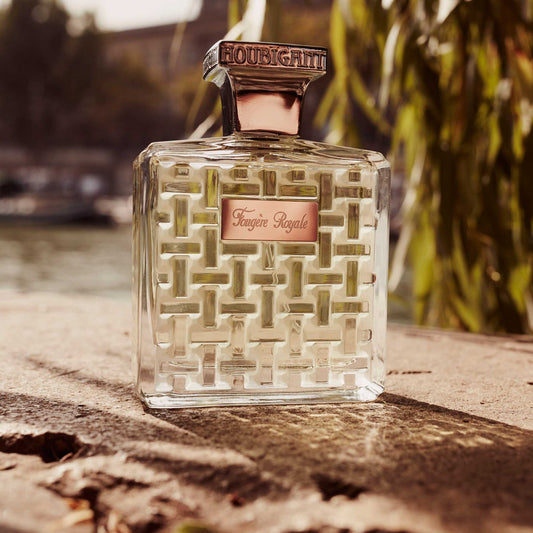
You cannot discuss sage without Fougère Royale by Houbigant: the house founded an entire olfactory family in 1882, and sage answers lavender and coumarin there. Viking Cologne by Creed places it in the top, for a herbal, citrus freshness. At Akro, Haze and Smile use it differently, in contrast with smoky or sunlit materials. Or du Sérail by Naomi Goodsir sets it instead among tobacco and candied fruit, where it provides the only green breath. Four houses, four ways of using the same herb, from strict classicism to deliberate contrast.

Accords and fragrance families

Sage calls for aromatics. It pairs naturally with lavender, rosemary and citrus, with which it builds clean, sharp openings. Over a base of oakmoss and patchouli it turns deep green and serves chypre perfumes. Its historic home remains the fougère, an accord built on lavender, coumarin and mosses. It also appears in contemporary aromatic perfumes, where it stands in usefully for mint, and as a counterpoint to heavy materials such as tobacco or leather, which it lightens without contradicting. Used sparingly, it makes almost any accord read cleaner and more open.

Who is it for, and when?

Sage is traditionally tied to masculine perfumery, but nothing in its smell requires that: its bitter freshness works very well on feminine skin, especially alongside bergamot or a rose. It is a spring and summer note, better by day than by evening, suited to the office, to sport and to hot climates where sweeter materials become heavy. It appeals to restrained olfactory personalities, looking for a legible perfume rather than a demonstrative trail. Among the noses represented on this material at Soleil d'Or are Bertrand Duchaufour and Anne-Sophie Behaghel. Both work regularly with green and aromatic materials.

How to choose a sage perfume

Test sage over time: very demonstrative on the first spray, it fades faster than the other notes in the formula, and the base is what will decide your purchase. The made-to-measure discovery box lets you compare five options at home, in 2 mL samples filled by hand, over several days. Two useful entry points: Fougère Royale for the classic, structured reading, and Paragon Extrait for a denser, more contemporary version. In the Lille boutique the team lets you smell the oil alone before the compositions. That single comparison usually settles the choice.

Sage at Soleil d'Or, a Lille perfumery since 1953

Founded in 1953 by Jeanne Muyllaert on the Grand'Place in Lille, Soleil d'Or is an independent perfumery passed down through the generations. Hubert Maës (third generation) made it a niche perfumery reference; today his daughters Victorine and Apolline Maës (fourth generation) uphold that standard at 22 rue de la Clef, Lille (59800). Our team walks you through every sage fragrance in the catalogue with expert advice and guided trials, and can point you to our guide to fragrance families.

Shipping & free in-store collection in Lille

Within mainland France, Colissimo shipping is free from €49 to a pickup point and from €79 to your door. Across Europe it is free from €90 to a pickup point and from €120 to your door; we also ship internationally. Live in Lille or the metropolitan area? Free in-store collection at 22 rue de la Clef is the fastest and most economical option. Full terms on our shipping page.

Frequently asked questions about Sage Perfume

À quoi sent la sauge ?

La sauge sent l'herbe froissée, avec une facette camphrée et une amertume sèche, légèrement poivrée. On y perçoit aussi quelque chose de minéral, proche de la pierre chaude. C'est une odeur de plein air, jamais sucrée, qui apporte de la clarté aux parfums aromatiques et aux fougères. Elle s'estompe assez vite sur la peau.

La sauge est-elle plutôt masculine ou féminine ?

La sauge est mixte, même si l'histoire l'a surtout employée dans les parfums masculins depuis l'essor des fougères. Rien dans son odeur ne l'y limite : associée à la rose ou aux agrumes, elle donne des compositions fraîches et nettes, portées indifféremment. Au Soleil d'Or, elle apparaît dans les deux registres.

Quel parfum à la sauge choisir ?

Pour la lecture historique, Fougère Royale de Houbigant reste la référence, structurée et aromatique. Pour une version plus vive et citronnée, Viking Cologne de Creed convient bien aux journées chaudes. Un essai à la maison sur deux jours tranche généralement la question.

Quelle différence entre la sauge et la sauge sclarée ?

Ce sont deux espèces distinctes. La sauge officinale sent l'herbe camphrée et amère, franchement verte. La sauge sclarée est plus douce, ambrée, un peu musquée et miellée, avec une facette foin et thé. La première rafraîchit une ouverture, la seconde réchauffe un cœur ou un fond.

La sauge tient-elle longtemps sur la peau ?

Seule, la sauge tient peu : quelques heures au maximum, car son essence est volatile. Elle sert avant tout à sculpter l'ouverture d'un parfum. Sa présence se prolonge indirectement lorsqu'elle est soutenue par des mousses, des bois ou de la coumarine, qui gardent longtemps son empreinte verte.