Magnolia in perfumery: two plants under one name
Grandiflora or Michelia: clearing up the confusion
This is the first point to settle, because it explains why two perfumes billed as magnolia can have nothing in common. Magnolia grandiflora is the large evergreen tree of the southern United States, whose very wide white flowers give off a lemony, creamy smell. It is almost never extracted: its contribution to a perfume nearly always comes through a reconstitution. Michelia alba, now placed in the genus Magnolia, is a different tree, grown in China and South-East Asia, whose slender flowers are steam-distilled — this is what the trade calls white magnolia, and it is the only one of the two from which a natural material is routinely obtained. That essence is distinctly greener, closer to champaca, its botanical cousin. The Michelia leaf is distilled separately too, greener still and far less floral, used in small touches for freshness. A perfumer writing magnolia is first of all choosing between those two characters.
What does magnolia smell like?
Of a white flower, but not like the others. There is first a frankly lemony facet, coming from molecules it shares with the citrus fruits, which gives it a freshness unusual among white flowers. Then there is a slightly milky roundness, almost creamy, that keeps it from staying purely fresh. The best bearings come from comparison: magnolia is far less narcotic and less animalic than jasmine, and far less camphorous, less raw-green than tuberose — two flowers that quickly fill a room, which magnolia never does. It is rounder than lily of the valley and less sunlit than ylang-ylang. Its weakness is the flip side of its quality: that lightness makes it discreet, and it has to be supported if it is to last.
Magnolia perfumes at Le Soleil d'Or
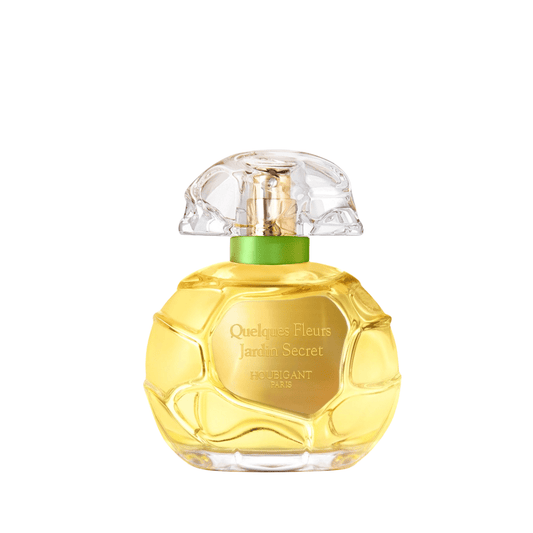
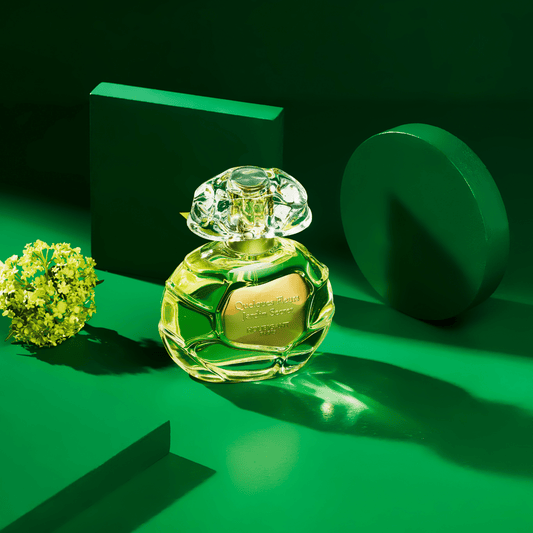
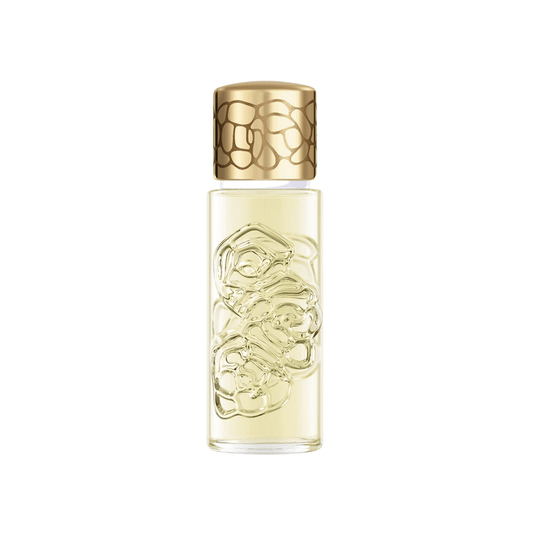
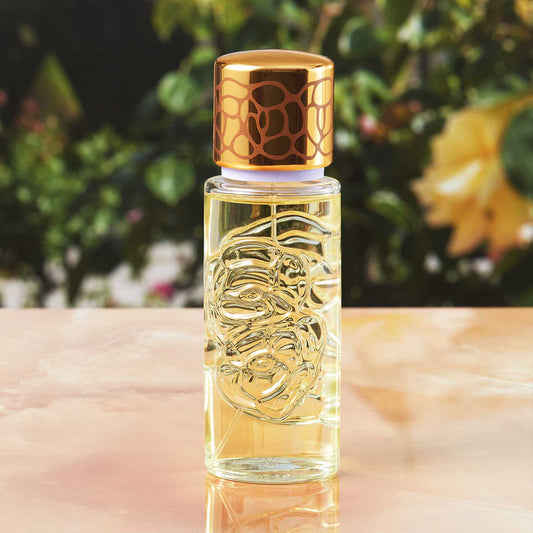
Petales de Magnolia by Houbigant Paris, composed by Celine Ellena, gives the most direct reading: the flower is the subject, surrounded by pomelo, nashi pear and a base of sandalwood and tonka bean. Queen of Silk by Creed places it at the top of an ambery floral, with osmanthus and saffron, ahead of a tuberose heart. At Xerjoff, Ouverture pairs it with fig leaf and orange, in a green opening that slides towards a vanillic, resinous base. Lift Me Up by Initio draws a sunlit reading from it, backed by bergamot and then tonka bean. More unexpected, Queen of the Sea by New Notes sets it in the middle of a bouquet of roses and geranium crossed by a marine accord.
Magnolia accords and fragrance families
Magnolia belongs to floral perfumes, but its lemony facet makes it a bridge towards hesperidic perfumes: paired with bergamot, lemon or grapefruit, it extends the citrus instead of cutting it off. That accord is heavily used in contemporary perfumery, because it makes a white flower wearable at the office. With neroli and orange blossom it builds luminous bouquets; with jasmine and tuberose it acts as a clearing in heavier white florals. Champaca, its close botanical relative, thickens it and turns it towards Asia. In the base, sandalwood and musk are its best support and give it the staying power it lacks; aquatic perfumes make ready use of it for its floral freshness.
Who is it for, and when?
Magnolia is one of the easiest white flowers to wear, and one of the few that works unreservedly on men: its lemony freshness spares it the heady effect held against jasmine or tuberose. It is at its best in spring and early summer, by day rather than in the evening, and suits shared spaces perfectly because it does not take up all the room. In winter it is better chosen over a woody or ambery base that carries it. On longevity, stay clear-eyed: compositions where magnolia genuinely dominates are rarely very persistent, and many perfumes that announce it use it mostly at the top. Spraying onto clothing extends the effect markedly.
How to choose your magnolia perfume
Start by working out which magnolia you are dealing with, because the two plants do not lead to the same perfume: the lemony, creamy direction of the grandiflora, or the green, almost Asian direction of white magnolia. Then smell what surrounds it, because magnolia is rarely alone and it is its neighbours that decide the final character — a magnolia over citrus and a magnolia over amber have little in common. The bespoke discovery box brings together five 2 mL samples composed by hand, each to be worn for a full day; it is the only way to know what is left at the end. To get your bearings, compare a magnolia treated as the subject, Petales de Magnolia, with a magnolia folded into an ambery floral, Queen of Silk.
Magnolia at Le Soleil d'Or, a Lille perfumery since 1953
Founded in 1953 by Jeanne Muyllaert on the Grand'Place in Lille, Le Soleil d'Or is an independent perfumery passed down from one generation to the next. Hubert Maes (third generation) turned it into a reference for niche perfumery; today his daughters Victorine and Apolline Maes (fourth generation) uphold the same standards at 22 rue de la Clef, Lille (59800). Our team will let you smell the magnolia perfumes in the catalogue, with expert advice and guided trials, and can point you in the right direction using our guide to fragrance families.
Delivery & free in-store collection in Lille
Within mainland France, Colissimo delivery is free from 49 € to a pickup point and from 79 € to your door. Within Europe, it is free from 90 € to a pickup point and from 120 € to your door; we also ship worldwide. Live in Lille or nearby? Free in-store collection at 22 rue de la Clef is the fastest and most economical option. Full terms on our shipping page.