Myrrh in perfumery: the bitter resin
A Commiphora gum-resin, harvested by incision
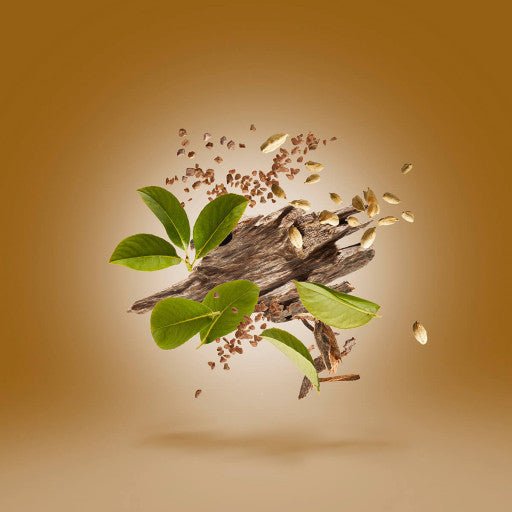
Myrrh comes from thorny shrubs of the Commiphora genus — chiefly Commiphora myrrha — growing in Somalia, Ethiopia, Kenya and the southern Arabian peninsula, on dry, stony ground. The harvesting gesture is the same as for frankincense: the bark is cut, the tree exudes a pale sap, and that sap hardens in the air into red-brown tears gathered by hand. There the resemblance stops, and the point is worth making straight away, because the two resins have been confused since antiquity: olibanum comes from the Boswellia genus, myrrh from Commiphora. Two different trees, two unrelated smells. The page devoted to frankincense sets out the olibanum supply chain, its forms of extraction and the pressure now bearing on the stands. For myrrh, perfumery steam-distils the tears into a dark, viscous essence, or treats them with solvent for a denser resinoid still, awkward to handle and apt to colour the compositions it enters. Another Commiphora yields opoponax, often called sweet myrrh: it is a distinct material, sweeter and more balsamic, not to be confused with myrrh proper.
What does myrrh smell like?
Bitter, first of all, and that is what surprises people. Then medicinal, almost pharmaceutical — myrrh served as an antiseptic long before it served as a perfume, and you can tell. It is cold where frankincense is luminous, and the contrast between the two is sharp: less lemony freshness, less mineral clarity, more earth and more shadow. Two facets define it and belong to it alone: a smell of fresh mushroom, damp, close to undergrowth, and a dry leather facet that turns up late in the dry-down. To that is added an odd sensation, hard to describe other than as a numbing effect: myrrh dulls the nose a little, the way clove dulls the tongue. Compared with its neighbours it is markedly more bitter than benzoin, colder than labdanum, less animalic than oud. On skin it lasts a very long time while staying close to the body.
Myrrh perfumes at Le Soleil d'Or
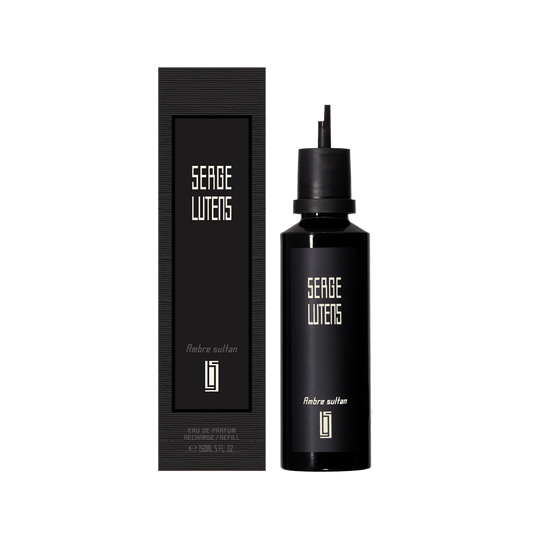
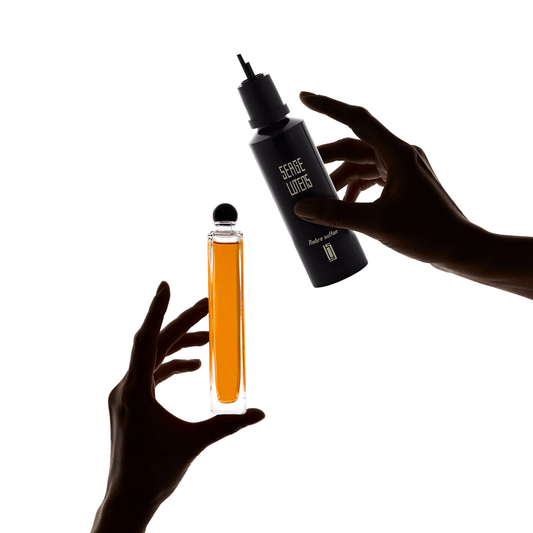
Black Gemstone by Stephane Humbert Lucas gives the most radical reading: myrrh is handled as tar here, set against three cedars, teak and incense, with a Sicilian lemon for its only opening of light. At the other end, Vanitas by Profumum Roma wraps it in vanilla, orange blossom and sandalwood, turning it into a round material where the bitterness serves only as counterpoint. bast by anti, composed by Sidonie Lancesseur, returns it to its historic place, beneath an overdose of olibanum and next to saffron and cardamom. Crystal Saffron Extrait by Matiere Premiere, signed by Aurelien Guichard, draws a clean contemporary version from it, stretched between saffron and ambroxan. Finally Ambre sultan by Serge Lutens, composed by Christopher Sheldrake, places it at the heart, between an opening of bitter herbs and an amber base.
Myrrh accords and fragrance families
Myrrh belongs first of all to oriental perfumes and amber perfumes, where it works alongside the other resins — frankincense, benzoin, labdanum, styrax — bringing those warm bases the bitterness that keeps them from turning cloying. That is precisely its most useful role: it dries things out. With saffron and iris it gives cold, powdery accords; with leather and oud, dark medicinal compositions; with rose, that contrast between petal and resin which oriental perfumery has long exploited. Its dry facet makes it a natural fit for woody perfumes, over a sandalwood or a cedar. Softened by vanilla and orange blossom, it becomes far more approachable.
Who is it for, and when?
Myrrh is unisex; gender does not come into it. That said, it is worth saying plainly: it is harder to wear than frankincense. Where incense wins people over quickly, myrrh asks you to accept its bitterness, its mushroom side and that apothecary-bottle impression some never get past. It is not a note for a first perfume, and a raw myrrh worn into a meeting produces an effect you have to want. Autumn and winter suit it better, since heat tends to exaggerate the medicinal facet. Two practical points: it is one of the most tenacious materials on the palette, so two sprays are usually enough, and its sillage stays close to the body even when the wear time runs past a full day.
How to choose your myrrh perfume
The question to settle is a simple one: are you after raw myrrh, bitter and leathery, or myrrh softened, melted into a vanilla or an amber? Both exist under the same word and the gap is considerable. Always try it on skin, and let two hours pass: myrrh unfolds slowly, and its leather facet only arrives late. The bespoke discovery box brings together five 2 mL samples composed by hand, each to be worn for a full day — the best way to find out whether this material is for you before committing to a bottle. To get your bearings, compare a myrrh handled as tar such as Black Gemstone with a myrrh wrapped in vanilla such as Vanitas.
Myrrh at Le Soleil d'Or, a Lille perfumery since 1953
Founded in 1953 by Jeanne Muyllaert on the Grand'Place in Lille, Le Soleil d'Or is an independent perfumery passed down from one generation to the next. Hubert Maes (third generation) turned it into a reference for niche perfumery; today his daughters Victorine and Apolline Maes (fourth generation) uphold the same standards at 22 rue de la Clef, Lille (59800). Our team will let you smell the myrrh perfumes in the catalogue, with expert advice and guided trials, and can point you in the right direction using our guide to fragrance families.
Delivery & free in-store collection in Lille
Within mainland France, Colissimo delivery is free from 49 € to a pickup point and from 79 € to your door. Within Europe, it is free from 90 € to a pickup point and from 120 € to your door; we also ship worldwide. Live in Lille or nearby? Free in-store collection at 22 rue de la Clef is the fastest and most economical option. Full terms on our shipping page.