Leather in perfumery: an accord, not a raw material
There is no such thing as leather essence
Let us say it straight away: nobody distils a hide. There is no “leather” raw material the way there is a rose essence or a sandalwood. What perfumery calls a leather is a reconstruction, and its history is first of all the history of a process. The glove-makers and perfumers of Grasse masked the smell of tanning under flowers in the 16th century; the so-called Russian leathers took their smell from the birch oil the hides were rubbed with to soften them, a smell of tar and smoke that perfumery ended up reproducing for its own sake. From the 1930s, isobutyl quinoline — dry, bitter, almost metallic — gave perfumers a leather they could dose to the gram. To it were added styrax, cade, castoreum, and today a whole family of suede and saffron molecules. Each house therefore writes its own leather, and two formulas carrying the same word sometimes have nothing in common.
What does leather smell like?
Honesty is required here: the word on its own is not enough to know what you are going to smell. At one extreme, suede — powdery, soft, almost cosmetic, built on iris, violet and ionones; that is a leather that caresses. At the other, tarry leather, smoky and burnt, built on birch and cade, close to the smell of a wood fire or a hot tyre; that one is not for everyone. Between the two lie animalic leather, held up by castoreum and labdanum, amber leather and vanillic leather, where the material is softened until it becomes comfortable. What all these readings share is a bitter dryness in the background, and long wear: leather is a matter of the base, it declares itself late and then stays.
Leather perfumes at Le Soleil d'Or
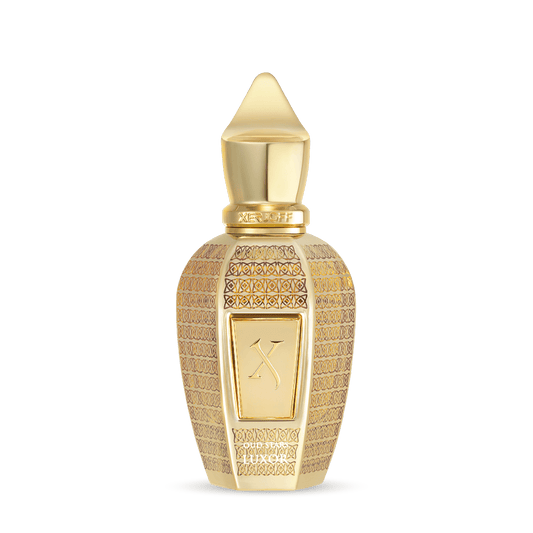
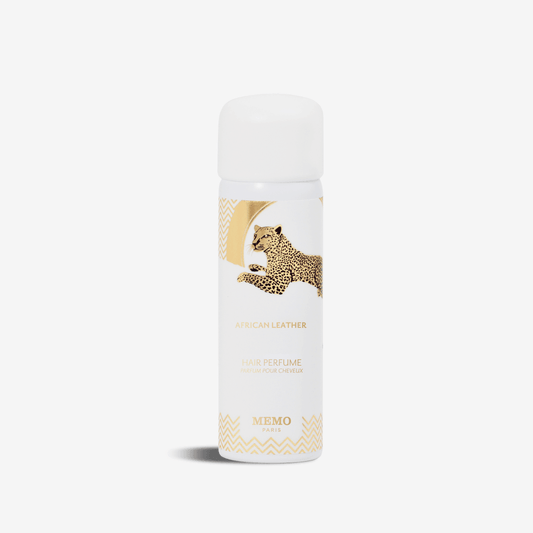
Vanille Leather by BDK Parfums, signed by Dominique Ropion, gives the softest version: a leather melted into vanilla and white flowers. At the opposite end, Cuir Velours by Naomi Goodsir, composed by Julien Rasquinet, takes it towards tobacco, rum and incense, in a smoky, resinous register. African Leather by Memo Paris, by Alienor Massenet, spices it with cinnamon and rose over an oud base. Oud Stallion Extrait by Maison Crivelli gives the densest reading, held up by saffron, while Opera by Xerjoff slips it under an ambery floral where it shows only in the background.
Leather accords and fragrance families
Leather has a family of its own, leather perfumes, and it is one of the few families named after an effect rather than after a material. It also structures a large part of chypre perfumes, where it meets oakmoss and patchouli. Its most constant companions are tobacco, incense and styrax, which extend its smoky facet. With saffron and oud it gives the oriental leathers; with iris and rose, the powdery leathers and the suedes; with vanilla and amber, the comfortable ambery perfumes that have done a great deal to reconcile the wider public with the note.
Who is it for, and when?
Leather was long filed on the masculine side, and it no longer is: powdery suedes and vanillic leathers are worn by anyone, and some of the most striking leathers in history were written for women. The real question is not gender but intensity. This is a base note, lasting eight hours and often longer, with a sillage that gets noticed: a tarry leather in a meeting or an open-plan office is not a good calculation. Autumn and winter suit it better, on thick fabrics; in summer the heat amplifies its animalic facet and you need to spray a good deal less. One thing worth knowing: isobutyl quinoline, the central molecule of classic leathers, has had its use restricted by regulation, which is why several great old leathers have been reformulated and smell softer today than they did at their creation.
How to choose your leather perfume
The first thing to do is to place what you are after on the suede-to-tar axis, because that is where the whole gap lies. Saying “I like leather” tells nobody anything, yourself included: ask instead to smell a soft leather and a smoky one side by side, and the answer arrives in thirty seconds. Then let time do its work: leather rarely declares itself on spraying, and it takes one to two hours to smell it properly. The bespoke discovery box brings together five 2 mL samples composed by hand, each to be worn for a full day — it is the only honest way to judge a base note. To get your bearings, compare Vanille Leather, a soft vanillic leather, with Cuir Velours, a smoky tobacco leather.
Leather at Le Soleil d'Or, a Lille perfumery since 1953
Founded in 1953 by Jeanne Muyllaert on the Grand'Place in Lille, Le Soleil d'Or is an independent perfumery passed down from one generation to the next. Hubert Maes (third generation) turned it into a reference for niche perfumery; today his daughters Victorine and Apolline Maes (fourth generation) uphold the same standards at 22 rue de la Clef, Lille (59800). Our team will let you smell the leather perfumes in the catalogue, with expert advice and guided trials, and can point you in the right direction using our guide to fragrance families.
Delivery & free in-store collection in Lille
Within mainland France, Colissimo delivery is free from 49 € to a pickup point and from 79 € to your door. Within Europe, it is free from 90 € to a pickup point and from 120 € to your door; we also ship worldwide. Live in Lille or nearby? Free in-store collection at 22 rue de la Clef is the fastest and most economical option. Full terms on our shipping page.