Ambroxan in perfumery: the molecule that replaced ambergris
From the sclareol of clary sage to ambroxan
The story begins with a shortage. Ambergris is a concretion formed in the digestive system of the sperm whale, expelled at sea and matured for years by salt and sun before washing up on a beach. It cannot be farmed, only found: the quantities are tiny, the prices extravagant, and its trade is today banned or tightly controlled depending on the country. So perfumery set out to isolate what actually smelled. In the 1950s the Firmenich laboratories identified and then reproduced ambroxide, one of the molecules that the slow oxidation of ambergris brings out. Industry then learned to make it by hemisynthesis from sclareol, extracted from clary sage, a plant grown in France and in Eastern Europe. The result is stable, reproducible, free of any animal material — and that is what note lists call ambroxan.
What does ambroxan smell like?
Of a warm stone by the sea: mineral, dry, faintly salty, with a woody warmth in the background. It is not the round, sweet smell the word amber usually suggests: amber notes rest on an accord of labdanum and vanilla, resinous and gourmand, whereas ambroxan is the exact opposite, dry and almost abstract. It is closer to musks in function: it gives an impression of skin rather than an identifiable smell. One point deserves to be made plainly: ambroxan has been everywhere since the early 2010s, to the point of becoming a tic of contemporary perfumery. A great many recent masculine bases resemble one another because they rest on the same molecule, dosed generously to produce sillage.
Ambroxan perfumes at Le Soleil d'Or
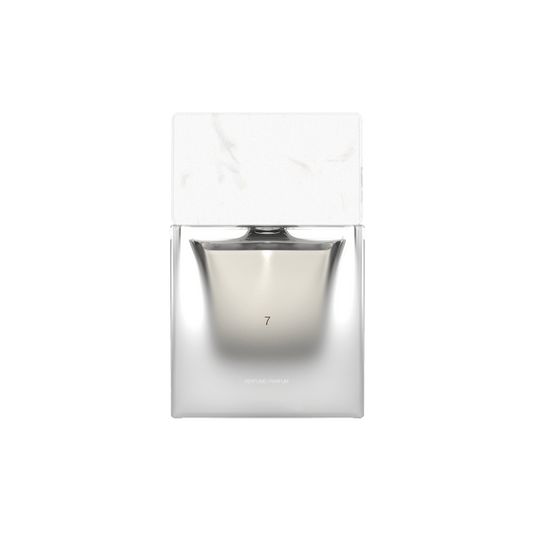
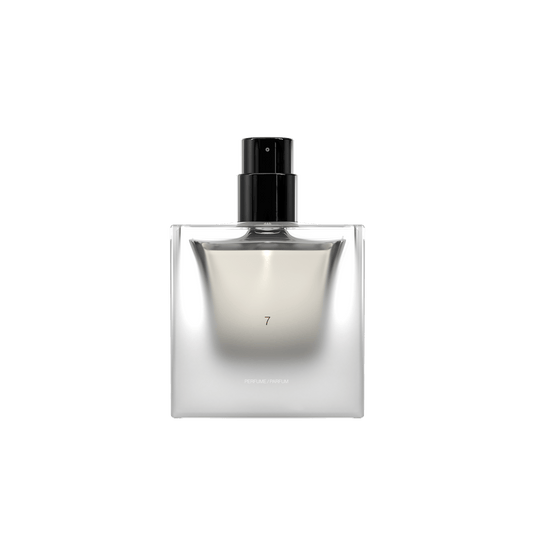
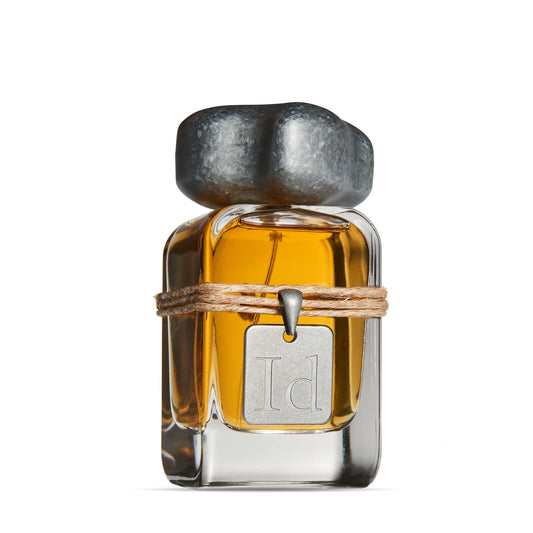
Aventus by Creed is the best-known example: ambroxan works underneath a smoky fruity accord and it is what carries the sillage. Parisian Musc by Matiere Premiere, signed by Aurelien Guichard, treats it as the subject instead, on a clean-skin accord. At BDK Parfums, 312 Saint-Honore uses it under a powdery iris to give it reach. East Extrait by Akro, composed by Olivier Cresp, sets it in a leathery, woody landscape, and Gozo by Jeroboam shows that it also works beneath an oriental floral.
Ambroxan accords and fragrance families
Ambroxan belongs to the base, never to the top. It is found first of all in woody perfumes, where it extends cedar, vetiver and sandalwood while adding diffusion. With musks and ambrette, it composes the skin accords that contemporary musky perfumes have made standard. Set under labdanum or benzoin, it gives amber perfumes that are drier and more mineral than the oriental tradition. Its cleverest use remains slipping it under a hesperidic top, bergamot first among them: the citrus evaporates, the impression of freshness stays.
Who is it for, and when?
Ambroxan is unisex, even if marketing has pushed it heavily towards masculine compositions. It lasts a very long time, on skin as on fabric, and it diffuses widely: it is a note to dose carefully when spraying, and one spray fewer is often enough in an office or a meeting room. It suits every season, with an advantage in winter where its dry warmth gains scale. One phenomenon deserves explaining, because it is the most common cause of “my perfume doesn't last”: part of the population has a specific anosmia to ambroxan and barely perceives it on themselves, while those around them smell it perfectly. If a perfume seems to vanish on you after an hour while people compliment you on it, ambroxan is very probably the reason.
How to choose your ambroxan perfume
The first question is whether you are after ambroxan for itself or for what it does to the other notes. Then, and this is peculiar to this molecule, do not judge by your own nose alone: ask someone else what they smell on you after two hours. The gap between the two perceptions is often spectacular. The bespoke discovery box brings together five 2 mL samples composed by hand, each to be worn for a full day, which gives the base time to settle. To get your bearings, compare a structural ambroxan hidden under a fruity accord such as Aventus with an ambroxan owned as the subject, Parisian Musc.
Ambroxan at Le Soleil d'Or, a Lille perfumery since 1953
Founded in 1953 by Jeanne Muyllaert on the Grand'Place in Lille, Le Soleil d'Or is an independent perfumery passed down from one generation to the next. Hubert Maes (third generation) turned it into a reference for niche perfumery; today his daughters Victorine and Apolline Maes (fourth generation) uphold the same standards at 22 rue de la Clef, Lille (59800). Our team will let you smell the ambroxan perfumes in the catalogue, with expert advice and guided trials, and can point you in the right direction using our guide to fragrance families.
Delivery & free in-store collection in Lille
Within mainland France, Colissimo delivery is free from 49 € to a pickup point and from 79 € to your door. Within Europe, it is free from 90 € to a pickup point and from 120 € to your door; we also ship worldwide. Live in Lille or nearby? Free in-store collection at 22 rue de la Clef is the fastest and most economical option. Full terms on our shipping page.