Patchouli in perfumery: earth, cocoa and wood
Patchouli, a fermented leaf from Indonesia
Pogostemon cablin is a herbaceous plant of the mint family, grown mainly in Sulawesi and Java. It is the leaves that are harvested, and fresh they smell of almost nothing: they have to be dried and then fermented before distillation, exactly the way tobacco is cured. The resulting oil has a rare property — it improves with time. A ten-year-old patchouli is rounder, softer and more sought-after than an oil from this year's harvest. Modern perfumery also draws from it, by molecular distillation, fractions stripped of the camphorous facet: this is what is known as patchouli heart, the source of the most elegant readings.
What does patchouli smell like?
Forget the image of the 1970s incense shop. Raw patchouli smells of damp earth after rain, of a wine cellar, of bitter cocoa and of wood, with a camphorous, medicinal edge on top — and it is precisely that edge that gave it its bad reputation, and precisely that edge which the modern fractions remove. What is left then is ample, velvety, lightly chocolatey, with a depth few materials reach. Its staying power is exceptional: several days on a garment. On skin it softens markedly and loses its earthy side in favour of cocoa and wood.
Patchouli perfumes at Le Soleil d'Or
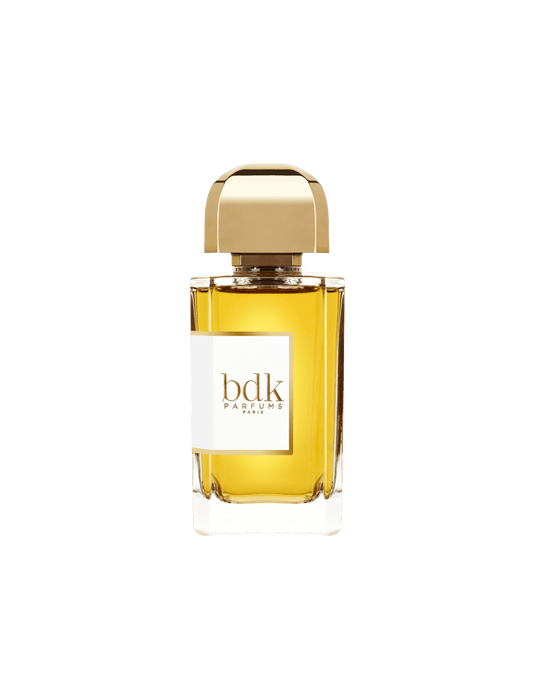
Bois Imperial by Essential Parfums, created by Quentin Bisch, is the most sought-after example in our catalogue: patchouli gives it its footing without ever showing itself. Enchanted Forest by The Vagabond Prince, composed by Bertrand Duchaufour, takes it towards undergrowth and dark fruit. At Maison Crivelli, Cuir InfraRouge by Jordi Fernandez sets it against leather. Vanille Leather by BDK Parfums, created by Dominique Ropion, softens it with vanilla, and Aventus by Creed uses it to hold up its smoky fruity accord.
Patchouli accords and fragrance families
Patchouli is one of the three legs of the chypre. With bergamot and oakmoss, it makes up the structure of chypre perfumes, and rose settles onto it naturally. Paired with vanilla and cocoa, it tips into gourmand perfumes. With leather and vetiver, it builds dark, earthy accords; beneath contemporary woody perfumes, it provides the volume and staying power that molecules alone do not deliver.
Who is it for, and when?
Patchouli is unisex, and always has been: you will find it in historic feminine chypres just as much as in contemporary masculine woods. Its density suits the cold seasons and evenings first of all, where its staying power becomes an asset. In its stripped-back version, though, it works very well during the day. The real advice lies elsewhere: use little. This is a material with a long trail, and two sprays too many turn an elegant presence into an invasive signature. On warm skin it quickly gains in volume.
How to choose your patchouli perfume
If patchouli has put you off in the past, do not conclude too quickly: there is little in common between a raw camphorous oil and a patchouli heart worked into the base of a woody composition. Try it on skin, and let two hours pass — that is when the material is at its best. The bespoke discovery box brings together five hand-filled 2 mL samples, which lets you compare without committing. Take two opposite directions to get your bearings: an invisible, structural patchouli such as Bois Imperial, and an openly dark patchouli such as Enchanted Forest.
Patchouli at Le Soleil d'Or, a Lille perfumery since 1953
Founded in 1953 by Jeanne Muyllaert on the Grand'Place in Lille, Le Soleil d'Or is an independent perfumery passed down from one generation to the next. Hubert Maes (third generation) turned it into a reference for niche perfumery; today his daughters Victorine and Apolline Maes (fourth generation) uphold the same standards at 22 rue de la Clef, Lille (59800). Our team will let you smell the patchouli perfumes in the catalogue, with expert advice and guided trials, and can point you in the right direction using our guide to fragrance families.
Delivery & free in-store collection in Lille
Within mainland France, Colissimo delivery is free from 49 € to a pickup point and from 79 € to your door. Within Europe, it is free from 90 € to a pickup point and from 120 € to your door; we also ship worldwide. Live in Lille or nearby? Free in-store collection at 22 rue de la Clef is the fastest and most economical option. Full terms on our shipping page.