Raspberry in perfumery: an accord, not an essence
A fruit nothing can be extracted from
Best said at once: there is no raspberry essence. The fruit is full of water, its odorant molecules are present in minute quantities, and neither distillation nor solvent draws a usable material from it — the few extracts obtained smell of cooked jam, not of fresh raspberry. This is exactly the situation of pear and apple, whose pages set out the same extraction problem; there is no point repeating it here. What a perfumer writes under the word raspberry is therefore an accord, built molecule by molecule. Its centrepiece is raspberry ketone, identified in the early 20th century, which carries the character of the fruit on its own; it is surrounded by green, tart molecules for freshness and by lactones for the velvet of the fruit's skin. This absence of a natural is not a shortfall in quality: it is simply how the note exists.
What does raspberry smell like?
Of a tart, velvety fruit, with a slightly powdery sweetness behind the attack. What really sets it apart from its neighbours is its kinship with the flower: raspberry and rose share several odorant molecules, chief among them damascones and ionones. That is a laboratory observation, but you can smell it: set on a rose, raspberry does not add itself on top, it extends something that was already there. This is why so many contemporary roses show a fruity facet without any fruit being named. Compared with other fruits it is less sulphurous and less green than blackcurrant, less milky than peach, tarter than pear. It generally occupies the top and the early heart, and its effect fades within an hour or two.
Raspberry perfumes at Le Soleil d'Or
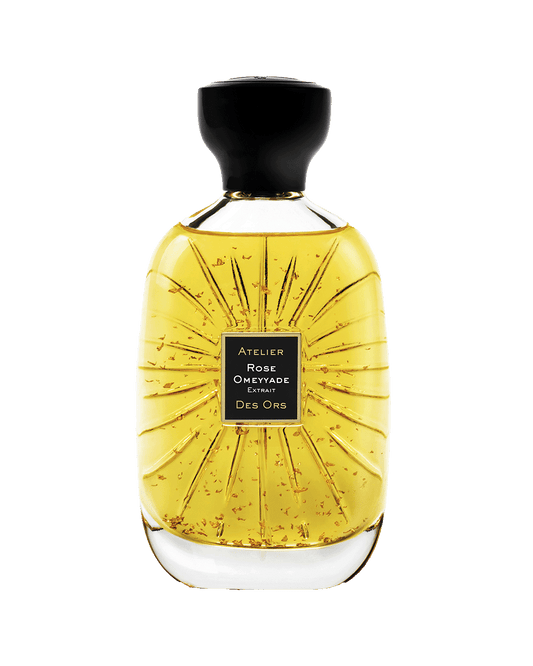
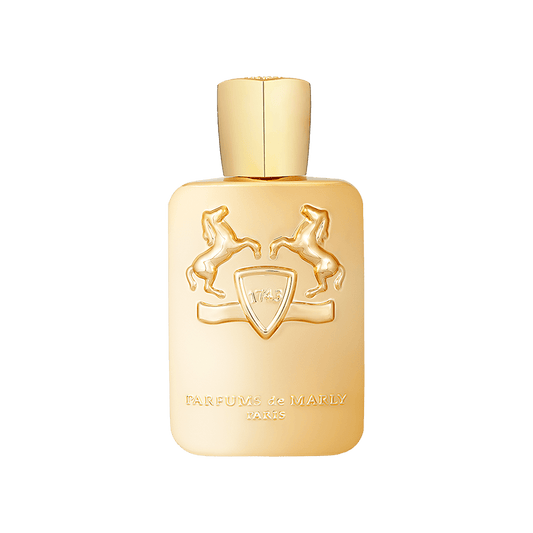
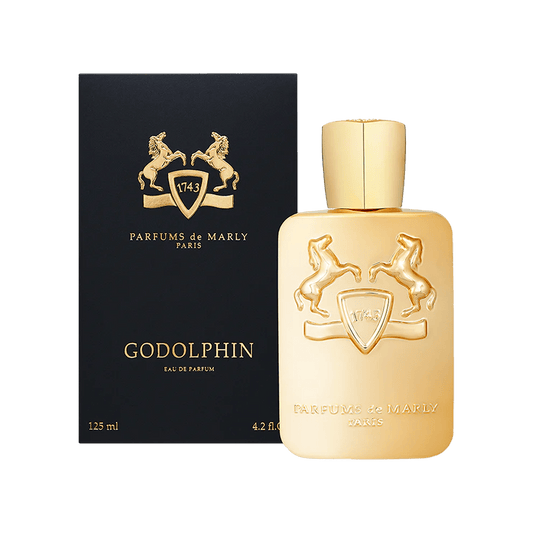
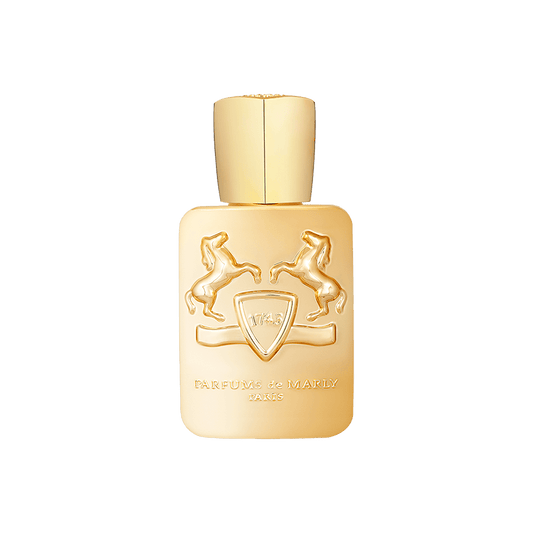
Cuir InfraRouge by Maison Crivelli, composed by Jordi Fernandez, gives the most unexpected reading: raspberry opens a suede leather here, and the fruit-against-leather contrast holds the whole composition together. Rose Omeyyade by Atelier des Ors illustrates exactly the kinship described above: raspberry and Damask rose are interwoven, over a base of oud and balsam. At Parfums de Marly, MELIORA, signed by Nathalie Lorson, places it in a clear fruity opening alongside blackcurrant and lemon. Celeste by Giardini di Toscana uses it to underline a violet heart, in an airy register. Darker, East by Akro, composed by Olivier Cresp, has it share the room with oud and leather.
Raspberry accords and fragrance families
Its natural home is among fruity perfumes, but its most interesting use lies elsewhere. On a floral it works as a developer: with rose it presses on a facet that was already there; with peony or violet it supplies the bite those tender floral perfumes lack. Paired with patchouli and vanilla, it gives the fruity gourmand perfumes that contemporary perfumery keeps turning out. Its most solid uses are nonetheless the most contrasted ones: with leather, oud or saffron it lights up dark bases without sweetening them. Pink pepper is its most frequent companion at the top.
Who is it for, and when?
Raspberry is unisex in principle, but its actual use leans towards feminine compositions: men's perfumery mostly employs it as a counterpoint to a leather or a woody base, rarely as the subject. It suits spring and mild days, where its tartness stays legible; in high summer, on warm skin, it tends to sag towards syrup. In winter, the leathery and ambery readings hold up best. On longevity, be warned: raspberry is a top and heart note. A perfume can be described as a raspberry fruity and no longer smell of raspberry at all after two hours — it is the patchouli, the musk or the amber in the base that decide what you are wearing for the rest of the day.
How to choose your raspberry perfume
There is one specific trap worth knowing. At low dose, raspberry does exactly what is asked of it: it brightens, it sharpens, it gives relief. At high dose it turns to boiled sweets, and that is what dates a perfume fastest — the sugary fruity-florals of the early 2000s are the example, and many of them have aged badly. The test is simple: if the opening suggests confectionery rather than fresh fruit, that impression will not soften. Always try it on skin, never on a blotter, and let an hour pass before judging. The bespoke discovery box brings together five 2 mL samples composed by hand, each to be worn for a full day. To get your bearings, compare a raspberry set on a floral, Rose Omeyyade, with a raspberry set against a leather, Cuir InfraRouge: the gap between the two says everything this note can do.
Raspberry at Le Soleil d'Or, a Lille perfumery since 1953
Founded in 1953 by Jeanne Muyllaert on the Grand'Place in Lille, Le Soleil d'Or is an independent perfumery passed down from one generation to the next. Hubert Maes (third generation) turned it into a reference for niche perfumery; today his daughters Victorine and Apolline Maes (fourth generation) uphold the same standards at 22 rue de la Clef, Lille (59800). Our team will let you smell the raspberry perfumes in the catalogue, with expert advice and guided trials, and can point you in the right direction using our guide to fragrance families.
Delivery & free in-store collection in Lille
Within mainland France, Colissimo delivery is free from 49 € to a pickup point and from 79 € to your door. Within Europe, it is free from 90 € to a pickup point and from 120 € to your door; we also ship worldwide. Live in Lille or nearby? Free in-store collection at 22 rue de la Clef is the fastest and most economical option. Full terms on our shipping page.