Oud in perfumery: the resin of a wounded tree
A defence reaction, not an ordinary wood
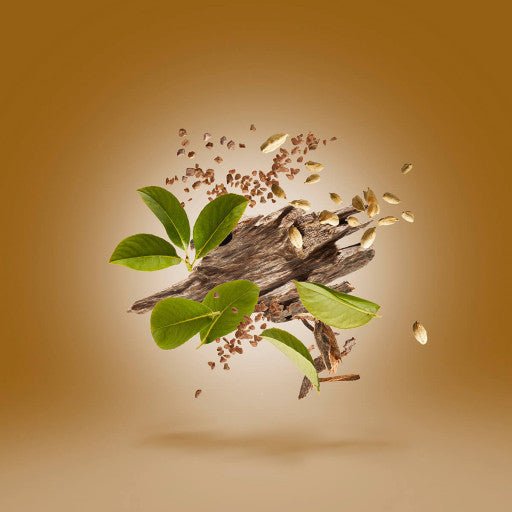
Oud is the only ingredient on the palette that exists only by accident. The Aquilaria, a tree from South-East Asia, produces a pale, odourless wood; it is when a wound lets a microscopic fungus in that the tree defends itself by saturating the affected cells with a dark, heavy resin. It is that resin that smells, not the wood. A healthy Aquilaria yields nothing, and the infection naturally reaches only a small fraction of the trees in a forest, with no way of spotting it from the outside: you have to fell the tree to find out. The resinous chips are then steam-distilled to obtain the oil, which takes a considerable mass of wood for very little material. Scarcity, blind felling and global demand have put the Aquilaria genus under CITES protection, and most legal production now comes from plantations where the infection is induced by inoculation.
What does oud smell like?
The answer comes in two parts, because the word covers two very different things. Natural oud oil, the Assam kind in particular, is frankly animalic: byre, aged cheese, damp leather, with an almost camphorous medicinal facet and the bitterness of burnt wood. Cambodian origins are softer, woodier, almost sweet, but the gap with what a Western nose expects from a “woody” remains enormous. The vast majority of perfumes sold in Europe under that name do not use this material: they rest on reconstituted accords, built with woody and smoky molecules that keep its darkness, its leathery side and its breadth while removing the animalic edge. That is not a deception, it is a compositional choice — reconstitutions are stable, reproducible and wearable day to day, which raw oil is not. But the gap between the two is such that it is better known before buying.
Oud perfumes at Le Soleil d'Or
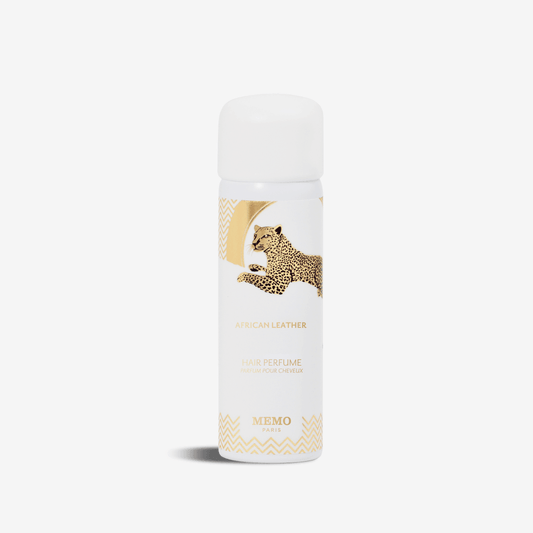
Royal Oud by Creed gives the most Western reading: a clean, dry oud set against cedar and cardamom, with nothing animalic about it. Oud For Greatness by Initio pairs it with lavender and saffron for a far more demonstrative sillage. Oud Maracuja by Maison Crivelli, composed by Jordi Fernandez, uses it against type beneath a tart passion fruit. At Memo, African Leather by Alienor Massenet melts it into a spiced leather, and Oud Abramad by BDK Parfums, signed by Mathilde Bijaoui, gives the densest and most resinous version.
Oud accords and fragrance families
Oud belongs first to woody perfumes and oriental perfumes, where it holds the base alongside patchouli, sandalwood and labdanum. Its best-known accord remains the one from Gulf perfumery, which pairs it with rose and saffron: the floral softens the resin, the spice makes the link. With incense and benzoin it pulls towards the resinous and the sacred; with leather and guaiac wood, towards smoky leather perfumes. A touch of bergamot or ginger at the top is often enough to keep the whole from overwhelming.
Who is it for, and when?
Oud has always been unisex in the Middle East; in Europe it is still read as masculine, especially in its darkest versions, whereas the rose-and-saffron readings wear very well on women. It is an autumn and winter note, made for the evening and for thick clothing that holds it. It is also one of the most tenacious on the palette: twelve hours on skin, several days on a coat, which makes it a poor choice for a shared office, a restaurant or a long journey. Spray sparingly — one or two sprays are enough — and keep it for contexts where an assertive sillage is not a problem.
How to choose your oud perfume
The first thing to settle is the question of animality: are you after a dark, civilised woody, or the real smell of the material, with its share of byre and medicine cabinet? Almost the whole Western offering answers the first demand, which is not a flaw but deserves saying. Always try it on skin and let an hour pass: oud takes time to open and changes a great deal with individual chemistry. The bespoke discovery box brings together five 2 mL samples composed by hand, each to be worn for a full day — the most honest way to approach so tenacious a note. To get your bearings, compare a clear, structured oud such as Royal Oud with a dense, resinous one such as Oud Abramad.
Oud at Le Soleil d'Or, a Lille perfumery since 1953
Founded in 1953 by Jeanne Muyllaert on the Grand'Place in Lille, Le Soleil d'Or is an independent perfumery passed down from one generation to the next. Hubert Maes (third generation) turned it into a reference for niche perfumery; today his daughters Victorine and Apolline Maes (fourth generation) uphold the same standards at 22 rue de la Clef, Lille (59800). Our team will let you smell the oud perfumes in the catalogue, with expert advice and guided trials, and can point you in the right direction using our guide to fragrance families.
Delivery & free in-store collection in Lille
Within mainland France, Colissimo delivery is free from 49 € to a pickup point and from 79 € to your door. Within Europe, it is free from 90 € to a pickup point and from 120 € to your door; we also ship worldwide. Live in Lille or nearby? Free in-store collection at 22 rue de la Clef is the fastest and most economical option. Full terms on our shipping page.